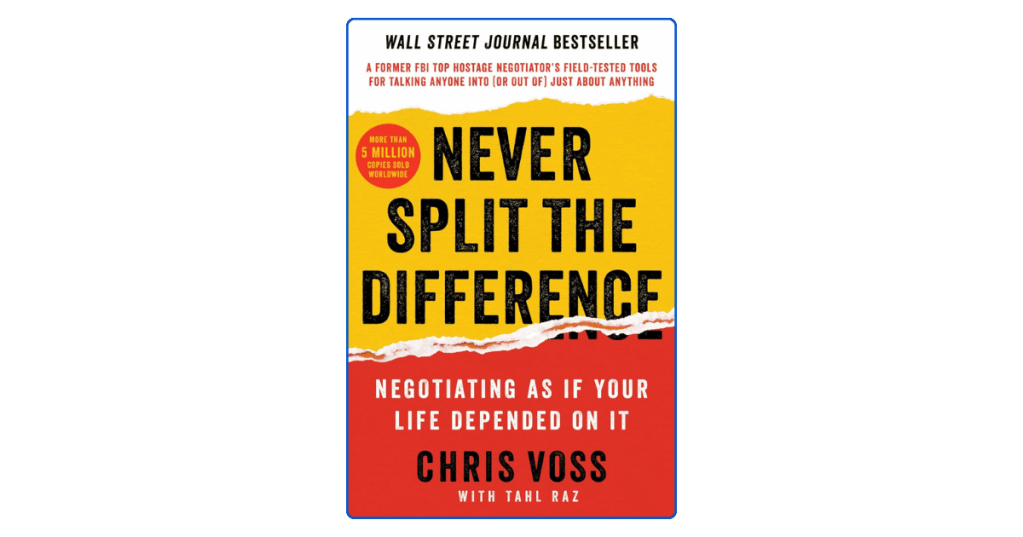
A master negotiator’s playbook for winning high-stakes conversations in business and life.
1. Never Compromise Just to End the Conversation
Chris Voss makes it clear splitting the difference sounds fair but often leaves value on the table. Great negotiators don’t settle for 50/50. They aim for outcomes that solve the real problem without sacrificing their core interests.
2. Tactical Empathy Wins Trust
Negotiation isn’t about dominating the other side. It’s about understanding them deeply fears, desires, motivations. Voss introduces “tactical empathy” as a powerful tool to disarm, build rapport, and steer the dialogue.
3. “No” Is the Start of Real Negotiation
Contrary to common belief, hearing “no” isn’t a rejection—it’s the beginning of clarity. Voss explains that “no” gives the other person control, lowers their defenses, and opens the door to real needs and opportunities.
4. Mirror and Label to Influence Calmly
Simple techniques like mirroring (repeating a few key words) and labeling emotions (“It seems like you’re frustrated”) help people feel heard. This lowers tension, builds connection, and shifts conversations in your favor without aggression.
5. “How” and “What” Questions Create Constructive Pressure
Instead of saying “you’re wrong” or “that won’t work,” Voss suggests asking “How am I supposed to do that?” These calibrated questions shift pressure back onto the other person, forcing them to reframe the problem or offer alternatives.
6. Beware the Fake “Yes”
Not all “yes” answers are honest. People often say yes just to end discomfort. Voss teaches you to dig deeper—by aiming for real agreement, not superficial compliance. A “yes” backed by commitment is what actually counts.
7. The 7-38-55 Rule of Communication
Words are just 7% of communication. Tone (38%) and body language (55%) matter even more. Voss encourages negotiators to tune in to the subtleties what’s not said often matters more than what is.
8. Deadlines Are Often False Pressure
Negotiators use deadlines to create urgency, but Voss shows most deadlines are arbitrary or flexible. Recognize them as tools of leverage never rush decisions just to meet a timeline someone else sets.
9. Use the “Ackerman Model” to Bargain Strategically
Voss introduces a structured offer technique: start low (but reasonable), increase in calibrated increments, and use non-round numbers with a non-monetary bonus at the end. This creates psychological buy-in and higher acceptance rates.
10. The Goal Is Collaboration, Not Victory
At its core, negotiation isn’t war it’s problem-solving. The most successful deals leave both sides feeling respected and understood. Voss emphasizes that long-term wins come from collaboration, not manipulation.
Disclosure: This post includes affiliate links that may earn me a commission at no cost to you if you make a purchase.
can explore the book here:
Blinkist: Best Book Summaries & Audio Book Guides
Final Takeaway
Never Split the Difference dismantles outdated ideas about negotiation and replaces them with tactical, real-world tools rooted in FBI hostage strategies and behavioral psychology. Whether you’re closing a deal, resolving conflict, or asking for a raise this book arms you with a mental edge that feels human, not hostile.
![nick [Alliedify] Avatar](https://0.gravatar.com/avatar/6955a6009ff9c6a76e2eb88c263c9426c8c386b0a7637b4d0cc051871ee8c9f3?s=40&d=identicon&r=G)
 Alliedify
Leave a comment