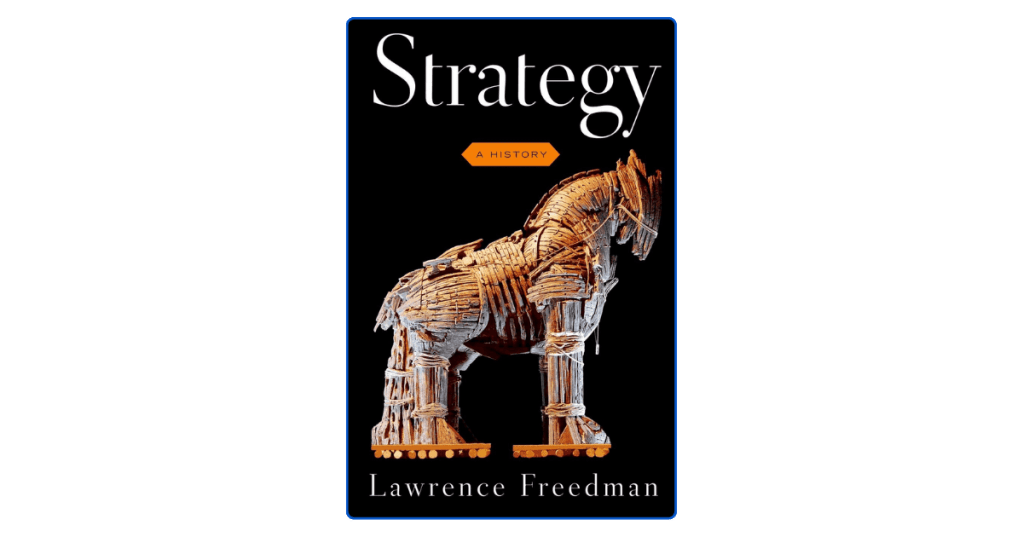
By Lawrence Freedman
Introduction – The Timeless Art of Shaping the Future
In Strategy – A History, Sir Lawrence Freedman takes readers on a sweeping intellectual journey through the evolution of strategy from ancient military campaigns to modern-day political maneuvering, corporate competition, and personal decision-making.
Freedman reveals that strategy is not merely about having a plan; it’s about adapting to uncertainty, anticipating change, and shaping circumstances to achieve an advantage. Drawing from centuries of historical events, philosophical debates, and real-world case studies, he examines how strategy has been used and misused by generals, leaders, activists, and entrepreneurs.
The book’s strength lies in its ability to connect ideas from diverse fields military history, business management, political theory, and social movements into a cohesive understanding of strategic thinking. It’s not just a history lesson; it’s a toolkit for navigating a complex and unpredictable world.
Top 10 Lessons from Strategy A History
1. Strategy Is Rooted in Adaptability, Not Rigidity
No plan survives contact with reality. The most effective strategies are flexible enough to respond to shifting conditions.
2. History Is the Best Strategy Teacher
From Sun Tzu to Clausewitz, historical thinkers have left strategic principles that remain relevant today if you understand their context.
3. Power Is as Much Perception as Reality
In politics, war, or business, the perception of strength can be as influential as actual resources.
4. Strategy Is About Shaping the Environment
Instead of reacting to circumstances, great strategists work to alter the playing field in their favor.
5. Simplicity Often Beats Complexity
Overly complicated strategies are prone to failure. The best plans are clear, actionable, and easy to communicate.
6. Grand Visions Require Tactical Steps
Even the most ambitious strategic objectives must be broken down into achievable, coordinated actions.
7. Human Behavior Is the Wild Card
Emotions, egos, and irrational decisions often disrupt even the best-laid plans making psychology a critical part of strategy.
8. Strategy Is About Alignment
Success requires aligning resources, people, and messaging toward the same objective. Disjointed efforts waste momentum.
9. Failure Is an Essential Teacher
Strategists who study defeats often gain more insight than those who only analyze victories.
10. Strategy Is Universal
Whether leading an army, running a company, or navigating personal goals, the core principles of strategy remain surprisingly consistent.
Disclosure: This post includes affiliate links that may earn me a commission at no cost to you if you make a purchase.
can explore the book here:
Blinkist: Best Book Summaries & Audio Book Guides
Why This Book Matters
Strategy A History is not just for military historians or political scientists it’s for anyone who makes decisions in competitive or uncertain environments. Freedman blends scholarly depth with practical insight, making it a must-read for leaders, innovators, and problem-solvers.
Final Take:
“Strategy is the bridge between where you are and where you want to be and history is the map that helps you cross it.”
![nick [Alliedify] Avatar](https://0.gravatar.com/avatar/6955a6009ff9c6a76e2eb88c263c9426c8c386b0a7637b4d0cc051871ee8c9f3?s=40&d=identicon&r=G)
 Alliedify
Leave a comment