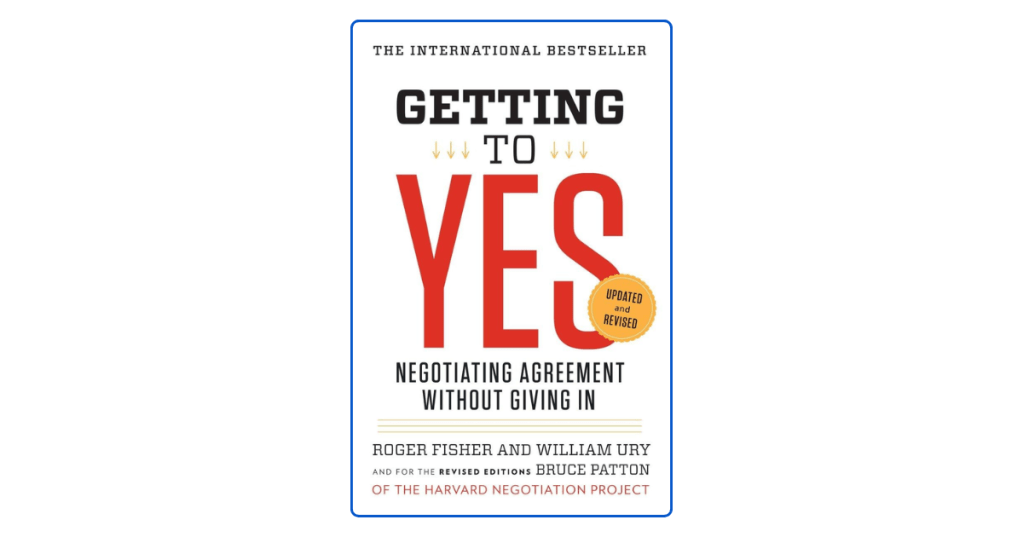
By Roger Fisher & William Ury
How to negotiate smarter without compromising your values or outcomes
1. Separate the people from the problem
Negotiation isn’t a battle of egos it’s a shared challenge to be solved. Emotions, biases, and personal histories can cloud judgment. Focus on the issue, not the personalities. Respect relationships while being firm on the facts.
2. Focus on interests, not positions
Behind every stance is a deeper need. People say they want “X,” but what they really want is often emotional or practical (security, respect, time). Understand why they want something not just what they demand—and you unlock creative solutions.
3. Invent options for mutual gain
Great negotiators don’t split the pie they expand it. Look for trade-offs, bundle priorities, and explore multiple solutions that benefit both sides. Flexibility breeds outcomes where everyone walks away with more.
4. Insist on objective criteria
Negotiations shouldn’t be dictated by pressure or power—they should be anchored in fairness. Use data, industry standards, legal precedent, or independent benchmarks to guide discussions. It turns debates into decisions.
5. Know your BATNA—and improve it
Your Best Alternative To a Negotiated Agreement (BATNA) is your power. If the deal falls through, what’s your next best option? Knowing this protects you from accepting a bad deal and gives you leverage to demand a better one.
6. Don’t bargain over positions—it leads to deadlock
Arguing over fixed outcomes locks both parties into win/lose scenarios. Instead, focus on shared interests and build the negotiation from common ground. Positions divide, interests connect.
7. Be hard on the problem, soft on the people
You can be assertive without being aggressive. Show empathy, listen actively, and treat the other party with respect while still holding your ground on the issues that matter. This combination builds influence and results.
8. Use negotiation as a joint problem-solving process
Think of the other side as a partner, not an adversary. Shift the mindset from “us vs. them” to “how do we solve this together?” When people feel heard, they’re more willing to compromise.
9. Communicate with clarity and purpose
Avoid assumptions and ambiguity. Say what you mean, ask clarifying questions, and confirm understanding. Miscommunication derails deals faster than disagreement.
Disclosure: This post includes affiliate links that may earn me a commission at no cost to you if you make a purchase.
can explore the book here:
Blinkist: Best Book Summaries & Audio Book Guides
10. Prepare, prepare, prepare
The best negotiators do the most homework. Understand the other party’s needs, values, pressures, and alternatives. Come to the table informed and intentional and you’ll leave with better terms, every time
Final Thought:
Getting to Yes isn’t about winning at all costs it’s about getting what matters most without burning bridges. In a world driven by collaboration, the ability to negotiate fairly, firmly, and flexibly is a career-defining skill.
![nick [Alliedify] Avatar](https://0.gravatar.com/avatar/6955a6009ff9c6a76e2eb88c263c9426c8c386b0a7637b4d0cc051871ee8c9f3?s=40&d=identicon&r=G)
 Alliedify
Leave a comment