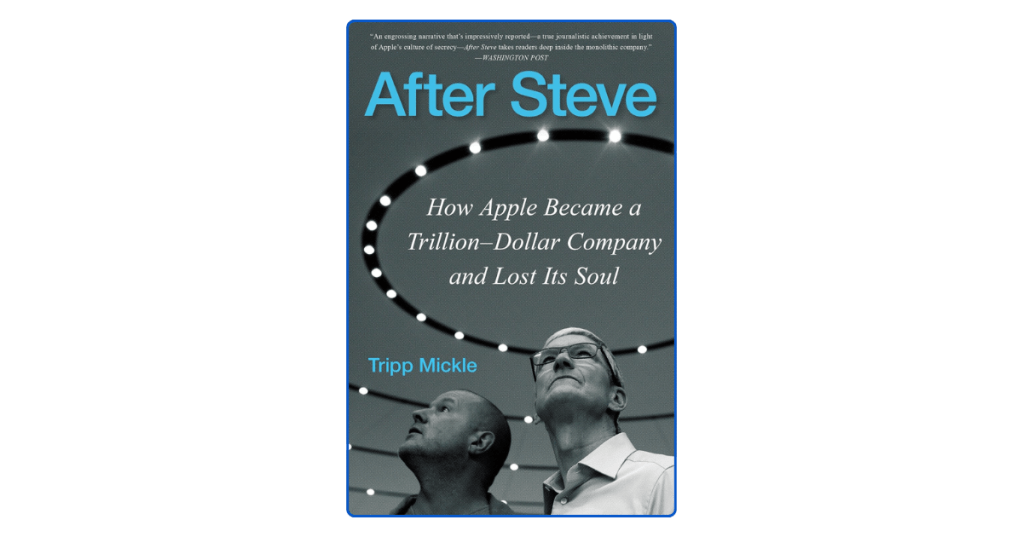
In After Steve, Tripp Mickle delivers a deeply reported inside account of Apple’s transformation after the passing of Steve Jobs. The book chronicles how Tim Cook, a master of operational excellence, and Jony Ive, the company’s visionary design chief, steered Apple into becoming a trillion-dollar powerhouse while quietly drifting away from the uncompromising creative spirit that once defined it.
Through exclusive interviews and behind-the-scenes details, Mickle explores the tension between innovation and efficiency, artistry and profitability. It’s the story of how Apple mastered the business of technology at an unprecedented scale, yet, in the process, began to lose some of the soul that made it iconic.
Part corporate biography, part cautionary tale, After Steve is a compelling reminder that even the most admired companies face a constant battle to balance vision with execution.
Top 10 Lessons from After Steve
1. Leadership Styles Shape a Company’s Future
Tim Cook’s operational focus brought Apple unparalleled profitability, but also shifted the company’s cultural DNA.
2. Visionaries Need Business Strategistsand Vice Versa
The partnership between Cook and Ive worked because it blended artistic innovation with logistical mastery.
3. Scale Brings Both Strength and Risk
Apple’s global supply chain became a competitive advantage, but also created dependencies that limited design freedom.
4. Innovation Requires Space to Breathe
Relentless efficiency can unintentionally suffocate the experimentation that fuels breakthrough products.
5. Brand Loyalty Is Earned Through Experience, Not Just Marketing
Apple’s premium status has always depended on delivering products that feel magical not simply functional.
6. Creative Burnout Is a Real Business Threat
Even the most talented designers can lose their drive when the corporate environment becomes overly process-driven.
7. Profit Margins Shouldn’t Dictate Every Decision
When financial metrics overshadow design values, the risk of losing brand identity grows.
8. Internal Tensions Can Signal a Deeper Cultural Shift
The eventual departure of Jony Ive was not just about one man it reflected Apple’s evolving priorities.
9. Legacy Brands Must Constantly Re-Earn Relevance
Apple’s success story is proof that past triumphs don’t guarantee future innovation.
10. Balancing Art and Commerce Is the Ultimate Leadership Challenge
Sustaining greatness requires protecting creativity while delivering consistent shareholder value.
Disclosure: This post includes affiliate links that may earn me a commission at no cost to you if you make a purchase.
can explore the book here:
Blinkist: Best Book Summaries & Audio Book Guides
Why This Book Matters Today
In an era where tech companies dominate the global economy, After Steve offers a rare look at the internal dynamics that shape billion-dollar decisions. It forces us to consider whether the relentless pursuit of growth can coexist with the preservation of a company’s original spirit.
Final Take:
“Great companies aren’t just built on profits or products they’re built on a philosophy. Lose the philosophy, and the rest will eventually follow.”
![nick [Alliedify] Avatar](https://0.gravatar.com/avatar/6955a6009ff9c6a76e2eb88c263c9426c8c386b0a7637b4d0cc051871ee8c9f3?s=40&d=identicon&r=G)
 Alliedify
Leave a comment