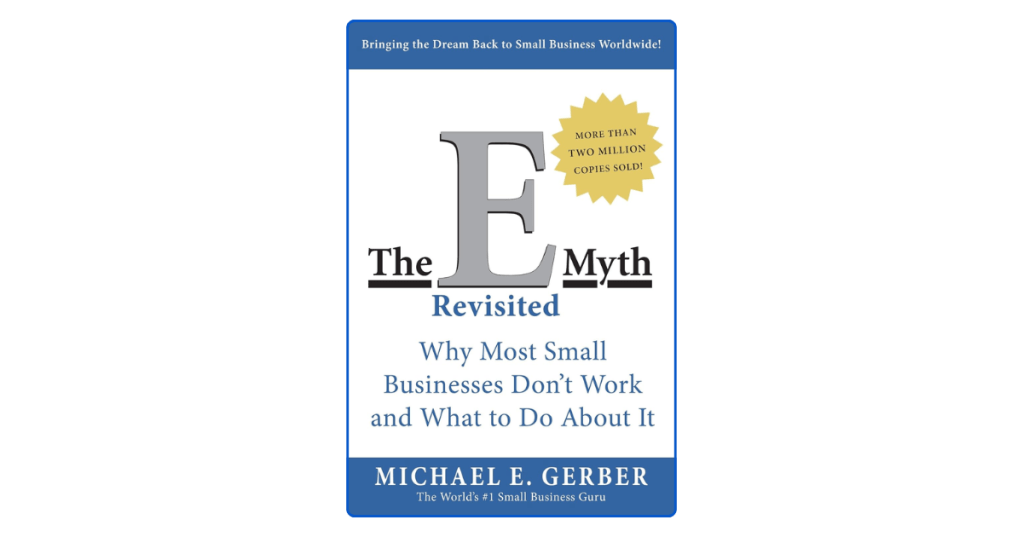
Why Most Small Businesses Don’t Work and What to Do About It
1. Working on the Business vs. in the Business
Most small business owners are trapped doing the technical work the day-to-day grind instead of building systems that allow the business to grow independently. Real freedom comes when you shift from technician to strategist.
2. You’re Not Just the Expert You’re the Entrepreneur
Being good at a craft (baking, coding, coaching) doesn’t mean you’re ready to run a business around it. Gerber stresses the importance of developing entrepreneurial skills, not just technical talent. That’s the only way to scale.
3. Build Systems, Not Just Services
Successful businesses run on replicable processes. If you leave everything to chance or memory, your business becomes fragile. Systematize everything from marketing to customer service so it can operate without you.
4. Create a Business That Could Be Franchised
Even if you never plan to franchise, design your business as if you will. This means creating standardized processes, a clear brand identity, and documentation that allows anyone to step in and run the show.
5. Document Everything Early
Most businesses don’t fail from lack of passion they collapse under chaos. Treat every task like it should be delegated tomorrow. Build training manuals, workflows, and checklists before you’re overwhelmed.
6. The Three Personalities Inside Every Business Owner
Gerber identifies the Technician (the doer), the Manager (the planner), and the Entrepreneur (the visionary). Effective leaders must learn to balance all three or hire to fill the gaps they can’t.
7. Don’t Build a Job. Build a Business.
If your business relies entirely on your presence, you haven’t built a business you’ve built a job. A real business is a machine that generates value even when you’re not there. That’s the ultimate test of scalability.
8. Clarity Over Chaos
Too many founders run their business by emotion, urgency, or instinct. The antidote? Create a clear business vision, write it down, and revisit it regularly. Direction brings discipline.
9. Your Customer Experience Should Be Designed, Not Left to Chance
Great businesses deliver consistent experiences. Whether someone walks into your store or lands on your homepage, their journey should feel intentional, branded, and friction-free.
10. Start With the End in Mind And Reverse Engineer It
Don’t build your business day by day. Start with a clear picture of what the final version looks like then build backwards. Every hire, product, and process should bring you one step closer to that vision.
Disclosure: This post includes affiliate links that may earn me a commission at no cost to you if you make a purchase.
can explore the book here:
Blinkist: Best Book Summaries & Audio Book Guides
Thoughts
If you want to stop being your own bottleneck and start building a business that grows without burning you out The E-Myth Revisited is your blueprint.
Freedom isn’t found in working harder. It’s built through structure, systems, and strategy.
![nick [Alliedify] Avatar](https://0.gravatar.com/avatar/6955a6009ff9c6a76e2eb88c263c9426c8c386b0a7637b4d0cc051871ee8c9f3?s=40&d=identicon&r=G)
 Alliedify
Leave a comment