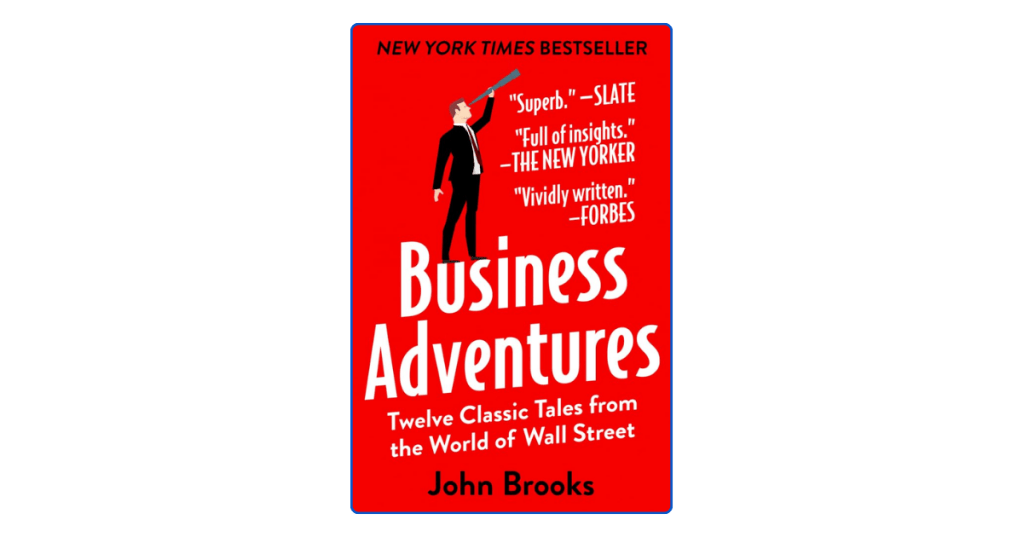
When Bill Gates and Warren Buffett both call Business Adventures their favorite business book, you pay attention.
Written by New Yorker writer John Brooks in the 1960s, Business Adventures is not a traditional how-to manual. Instead, it’s a collection of vivid, deeply reported narratives about some of the most pivotal moments in American business history from the collapse of the Edsel to the flash crash of the stock market.
What makes the book timeless is its storytelling. Brooks dives into the human drama behind big corporate wins and catastrophic failures. The result is a rare blend of business journalism and psychology that still resonates with entrepreneurs, investors, and leaders today.
These are not just stories about finance they’re cautionary tales about leadership, decision-making, risk, and the unpredictable nature of business.
Top 10 Key Lessons from Business Adventures
1. Success Doesn’t Immunize You from Failure
Even the most dominant companies can make devastating missteps. Ford’s Edsel disaster shows that ignoring market signals and over-relying on internal assumptions can sink even a powerful brand.
2. Markets Are Driven by People, Not Just Numbers
The stock market may appear logical on the surface, but Brooks reveals how emotion, psychology, and group behavior often outweigh rational analysis.
3. Transparency Builds Trust Even During Crisis
The Texas Gulf Sulphur case proves that insider trading erodes public trust. In the long run, transparency and ethical behavior are good for business and reputation.
4. Government and Business Are Inextricably Linked
Policy decisions, regulation, and political climate can make or break companies. Leaders must stay attuned to the broader environment, not just internal performance.
5. Communication Is a Strategic Asset
Xerox’s rise shows how strong storytelling and public perception shape a company’s trajectory as much as innovation does. It’s not just what you build it’s how you frame it.
6. Leadership During Uncertainty Defines Legacy
When faced with a scandal or sudden collapse, leaders either panic or rise. Brooks’s case studies show that calm, decisive, and honest leadership is rare and incredibly valuable.
7. Culture Eats Strategy for Breakfast
Companies that scale without shaping culture often implode. Brooks highlights how internal politics and ego can destroy great ideas faster than competition can.
8. Timing Is as Crucial as Talent
Even visionary companies like Xerox struggled when innovation outpaced the market’s readiness. Being too early can be just as dangerous as being too late.
9. Financial Literacy Is a Leadership Imperative
Many executives failed not because they lacked vision but because they didn’t fully understand the financial tools and risks they were using. Numbers aren’t just for the CFO.
10. Business Is a Story of People, Not Just Products
At its core, Business Adventures reminds us that behind every boardroom decision, failed launch, or market crash is a deeply human story. To lead well, you have to understand people not just spreadsheets.
Disclosure: This post includes affiliate links that may earn me a commission at no cost to you if you make a purchase.
can explore the book here:
Blinkist: Best Book Summaries & Audio Book Guides
![nick [Alliedify] Avatar](https://0.gravatar.com/avatar/6955a6009ff9c6a76e2eb88c263c9426c8c386b0a7637b4d0cc051871ee8c9f3?s=40&d=identicon&r=G)
 Alliedify
Leave a comment