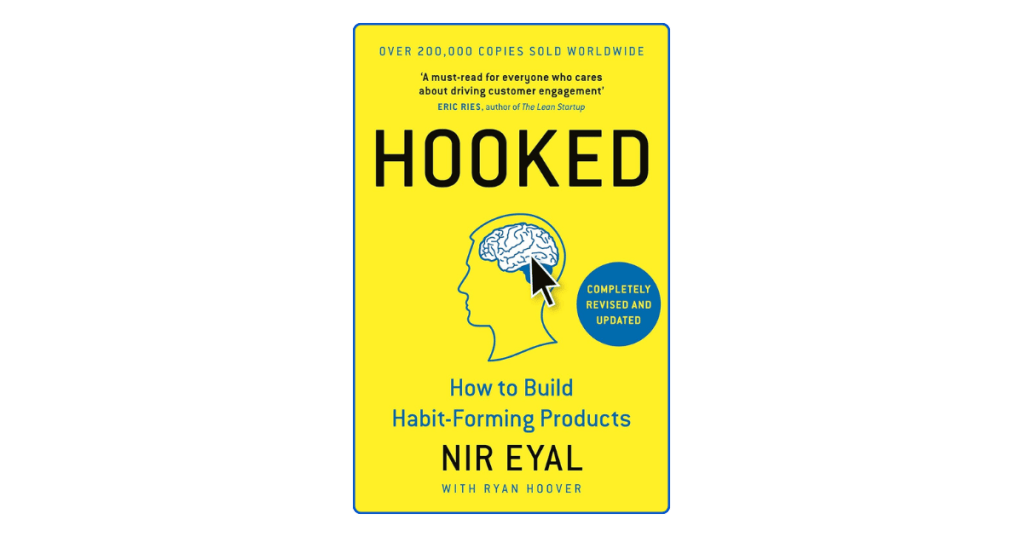
Why some products capture attention and others fade away.
1. Habits are the new competitive edge
In a crowded market, building a great product isn’t enough. To win, your product must become a habit. Habit-forming products don’t need ads to grow they earn a permanent place in users’ routines.
2. The Hook Model: Trigger → Action → Reward → Investment
This 4-step cycle explains how habits form. The most successful digital products use it to drive repeated use:
- Trigger gets the user to take action
- Action is the simplest behavior in anticipation of a reward
- Variable Reward keeps them curious
- Investment increases future engagement
Master this loop, and you’ve built more than a product you’ve created a ritual.
3. External triggers get users in; internal triggers keep them hooked
Push notifications, emails, or ads can start user engagement but lasting usage comes from internal triggers like boredom, stress, or FOMO. Align your product with internal motivators, and you tap into real human emotion.
4. Make the action as easy as possible
The simpler the action, the more likely users will take it. Whether it’s scrolling, tapping, or swiping reduce friction until the behavior feels automatic.
5. Variable rewards build anticipation and drive engagement
When the outcome is uncertain like getting likes, discovering something new, or winning a digital prize our brains release dopamine. Make your product’s rewards surprising and satisfying.
6. Users must put in effort to stay invested
Let users build something: a playlist, profile, streak, or history. When people invest time or data, they’re more likely to return. User effort = future commitment.
7. Focus on frequency
Habit-forming products are used frequently ideally daily or weekly. If your product isn’t used often, it’s unlikely to become a habit. Find natural use cases that fit into your user’s life rhythm.
8. Solve pain points, not just create pleasure
Habits often start as solutions to discomfort like checking messages to escape boredom. If your product relieves an emotional itch, it becomes a go-to response.
9. Build for behavior, not just features
It’s easy to get distracted by shiny features. But successful products focus on shaping user behavior through well-designed loops. Behavioral design beats feature bloat.
10. Hook responsibly ethics matter
Habit-forming tech is powerful. But with that power comes responsibility. Designing for addiction without purpose is manipulation. Build products that improve lives, not exploit them.
Disclosure: This post includes affiliate links that may earn me a commission at no cost to you if you make a purchase.
can explore the book here:
Buy book on Amazon
Blinkist: Best Book Summaries & Audio Book Guides
Final Takeaway:
Hooked is more than a product playbook it’s a psychology manual for modern builders. Whether you’re launching an app or scaling a startup, the key is to design for repeat engagement by understanding what really drives human behavior. Build products people don’t just use—build ones they can’t imagine living without.
![nick [Alliedify] Avatar](https://0.gravatar.com/avatar/6955a6009ff9c6a76e2eb88c263c9426c8c386b0a7637b4d0cc051871ee8c9f3?s=40&d=identicon&r=G)
 Alliedify
Leave a comment