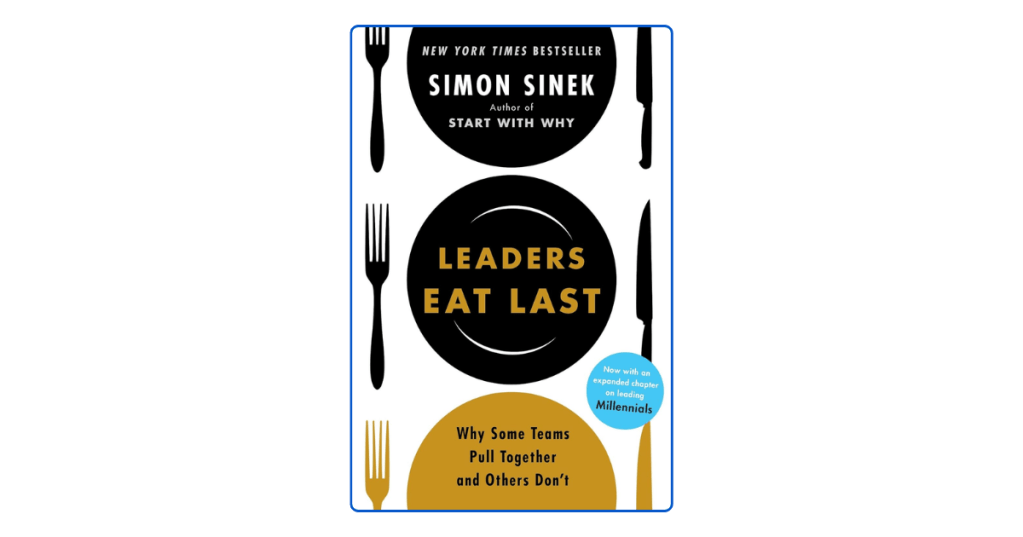
Great leadership isn’t about power it’s about service.
In Leaders Eat Last, bestselling author and speaker Simon Sinek explores what separates thriving, high-performing organizations from those plagued by dysfunction, burnout, and mistrust. His core thesis is simple yet powerful: the most successful teams are led by people who prioritize the well-being of others who create environments where trust, safety, and purpose come before personal gain.
Sinek draws from real-world examples across the military, business, and government to illustrate how biological instincts (like dopamine and oxytocin) shape human behavior and why leaders who tap into these truths can inspire loyalty, performance, and long-term success.
It’s a call to lead with empathy, to build a “Circle of Safety,” and to reject toxic cultures driven by fear and short-term thinking.
Top 10 Key Lessons from Leaders Eat Last
1. The Best Leaders Prioritize People Over Profits
When leaders put their people first above numbers, stock prices, and ego they build loyalty, resilience, and long-term success. People will go above and beyond for leaders who truly care.
2. Trust Is a Biological Need, Not Just a Soft Skill
Oxytocin, the “trust hormone,” is released when we feel safe and valued. Strong leaders foster this by creating environments where people feel protected not threatened.
3. The “Circle of Safety” Is the Foundation of Great Teams
Organizations thrive when people feel safe inside the group safe from layoffs, blame, or sabotage. Expand the Circle of Safety, and you expand collaboration, innovation, and performance.
4. Leadership Means Eating Last Not Taking First
Inspired by the Marine Corps tradition where leaders eat after their troops, true leadership is about serving others, not asserting authority.
5. Fear-Based Cultures Kill Creativity and Loyalty
When people are driven by fear of layoffs, blame, or failure they become defensive and disengaged. Fear makes people protect themselves, not the team.
6. Empathy Is a Strategic Advantage
Empathetic leaders ask, “How are you doing?” and mean it. That emotional connection builds trust and psychological safety key ingredients for high performance.
7. Long-Term Thinking Requires Courage
Short-term wins may please shareholders, but long-term leadership means investing in people, culture, and purpose even when it’s unpopular or expensive.
8. Recognition Fuels Motivation
Dopamine, the “achievement hormone,” spikes when people feel recognized. Regular appreciation and small wins can drive massive engagement over time.
9. Teams Mirror Their Leaders
People take cues from leadership. If leaders are transparent, humble, and mission-driven, the team follows. Toxic behavior from the top poisons everything beneath.
Disclosure: This post includes affiliate links that may earn me a commission at no cost to you if you make a purchase.
can explore the book here:
Blinkist: Best Book Summaries & Audio Book Guides
10. Leadership Is a Daily Practice, Not a Title
Being a leader isn’t about a job title it’s about consistent action. Every decision you make either strengthens or weakens the trust of your team. Lead like someone’s future depends on it because it does.
![nick [Alliedify] Avatar](https://0.gravatar.com/avatar/6955a6009ff9c6a76e2eb88c263c9426c8c386b0a7637b4d0cc051871ee8c9f3?s=40&d=identicon&r=G)
 Alliedify
Leave a comment