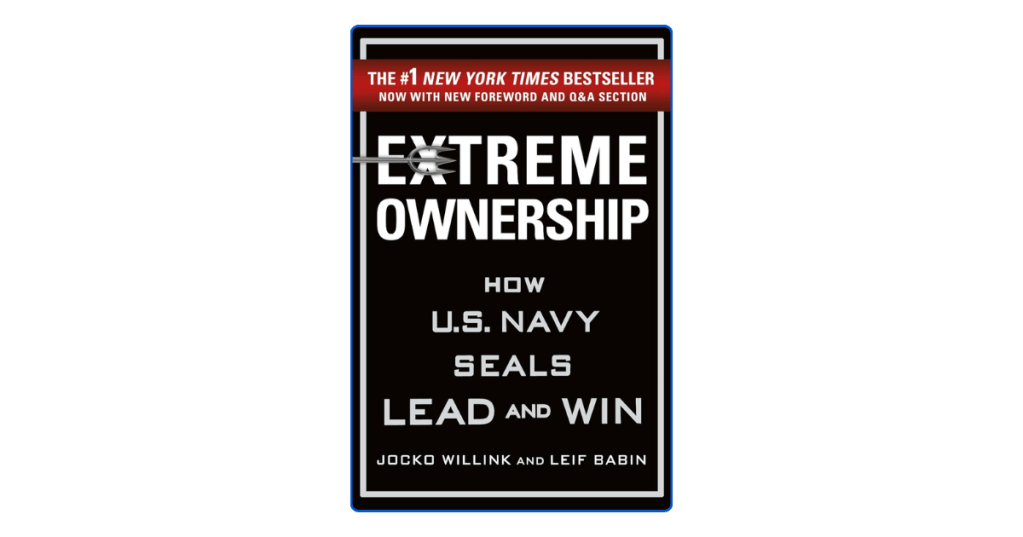
Extreme Ownership: How U.S. Navy SEALs Lead and Win isn’t just a military memoir it’s a leadership manual forged in the chaos of war and translated directly for business, life, and high-stakes decision-making.
Written by former Navy SEAL officers Jocko Willink and Leif Babin, the book reveals how the same principles that drive mission success in combat can transform organizations, teams, and individuals in any arena. With battle-tested stories from Iraq and clear-cut leadership frameworks, Extreme Ownership is a must-read for anyone who’s serious about accountability, team dynamics, and winning under pressure.
At its core, the book drives home one truth: There are no bad teams, only bad leaders and true leadership begins with owning everything in your world.
Top 10 Lessons from Extreme Ownership
1. Take Extreme Ownership Always
Leaders must own everything in their world. No excuses, no blame. If something goes wrong, it’s your responsibility to fix it, learn from it, and ensure it doesn’t happen again.
2. There Are No Bad Teams, Only Bad Leaders
Performance gaps aren’t usually about talent they’re about leadership. Great leaders elevate standards, instill discipline, and turn underdogs into top performers.
3. Believe in the Mission You’ll Never Inspire Others
If a leader doesn’t fully believe in the goal, neither will the team. Clarity, conviction, and communication start at the top and cascade down through every action.
4. Check Your Ego at the Door
Ego clouds judgment, blocks feedback, and fractures teams. True leadership requires humility especially when it’s time to listen, adapt, or admit you were wrong.
5. Cover and Move: Teamwork Is Everything
Success in any mission depends on synergy, not solo acts. “Cover and Move” means departments, units, or individuals must support one another, even when their goals seem separate.
6. Simplify the Mission
Complex plans fail in high-stress environments. Leaders must break goals down into clear, simple, actionable steps that everyone understands even under fire.
7. Prioritize and Execute Under Pressure
When everything is urgent, nothing gets done. Great leaders stay calm, identify the highest-impact task, and execute decisively then move to the next priority.
8. Decentralized Command: Empower Your People
Teams must operate independently with clarity and initiative. Leaders must communicate intent clearly, then trust junior leaders to make decisions on the ground.
9. Discipline Equals Freedom
Structure creates space. Rigorous habits like waking early, training hard, and planning obsessively enable creative thinking, fast decision-making, and personal resilience.
10. Leadership Is Both an Art and a Balance
Too much force creates resistance. Too much leniency breeds chaos. Leadership is a constant balancing act between confidence and humility, strictness and trust, vision and adaptability.
Disclosure: This post includes affiliate links that may earn me a commission at no cost to you if you make a purchase.
can explore the book here:
Blinkist: Best Book Summaries & Audio Book Guides
![nick [Alliedify] Avatar](https://0.gravatar.com/avatar/6955a6009ff9c6a76e2eb88c263c9426c8c386b0a7637b4d0cc051871ee8c9f3?s=40&d=identicon&r=G)
 Alliedify
Leave a comment