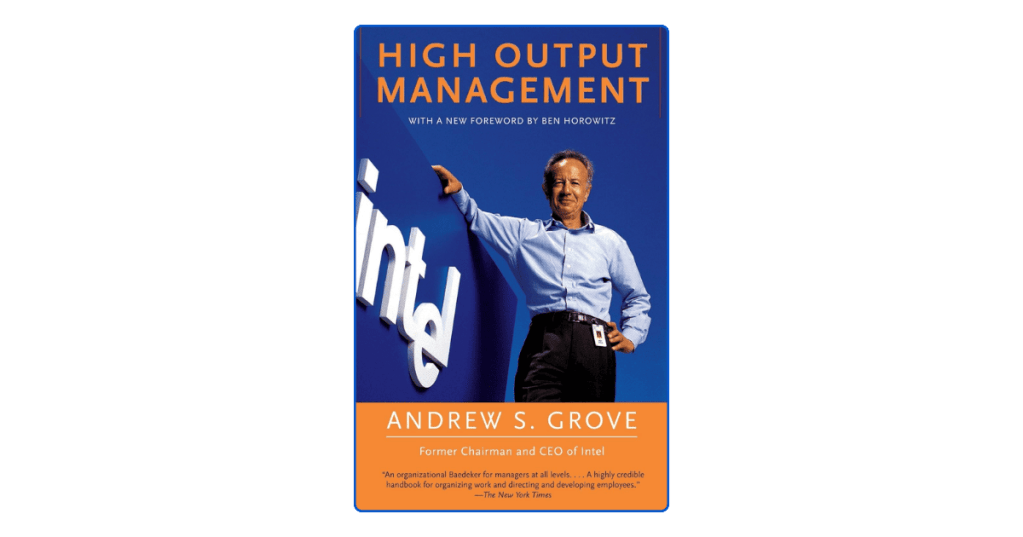
High Output Management isn’t just a book it’s a masterclass in execution from one of Silicon Valley’s most respected leaders.
Written by Andrew S. Grove, the legendary former CEO of Intel, this book distills decades of frontline management experience into a practical, no-fluff operating manual for managers at any level. Grove believed great managers aren’t born they’re trained. And in this book, he lays out the systems, frameworks, and mindsets needed to drive high-performance results, build strong teams, and scale organizations.
What makes this book stand out is its obsession with measurable output. Whether you’re managing a startup or leading a Fortune 500 division, Grove shows how to think like a process engineer optimizing every input, decision, and team action to increase output. It’s management thinking designed for real-world pressure, tight deadlines, and ambitious goals.
Top 10 Key Lessons from High Output Management
1. A Manager’s Output is The Output of Their Team
Your value as a manager is not in what you do personally, but in how effectively you enable others. High-leverage activities like coaching, decision-making, and delegation drive your true output.
2. Leverage Is the Secret to Impact
Focus on tasks that create the greatest ripple effect. For example, training one team member well can improve their performance for years making it far more impactful than a quick fix.
3. Meetings Are Tools, Not Time Fillers
Grove reframes meetings as strategic instruments. Done right, they’re high-leverage opportunities for alignment, problem-solving, and feedback not productivity killers.
4. Manage By Objectives (MBO)
Set clear, measurable objectives for individuals and teams. When people know exactly what success looks like, accountability and performance naturally improve.
5. Good Indicators Track Both Output and Activity
Leading indicators (like pipeline calls) and lagging indicators (like revenue closed) must be monitored together. Focusing only on results can delay corrections.
6. Process Matters as Much as Strategy
Operational excellence is a competitive advantage. Managers should think like engineers designing workflows, improving feedback loops, and optimizing bottlenecks.
7. Task-Relevant Maturity (TRM)
Don’t manage everyone the same way. Adapt your style based on an employee’s competence in a specific task. Novices need guidance, experts need autonomy.
8. Don’t Delay Difficult Conversations
Tough feedback gets harder the longer it’s postponed. Grove emphasizes candor, clarity, and urgency in performance management to course-correct fast.
9. Training Is a Core Management Responsibility
If your team isn’t improving over time, you’re not managing you’re babysitting. Teaching people to solve problems without you increases both output and trust.
Disclosure: This post includes affiliate links that may earn me a commission at no cost to you if you make a purchase.
can explore the book here:
Blinkist: Best Book Summaries & Audio Book Guides
10. You Can’t Manage What You Don’t Measure
Data-driven thinking is a non-negotiable. Whether it’s output per employee or time-to-decision, Grove urges managers to quantify results and continuously iterate.
![nick [Alliedify] Avatar](https://0.gravatar.com/avatar/6955a6009ff9c6a76e2eb88c263c9426c8c386b0a7637b4d0cc051871ee8c9f3?s=40&d=identicon&r=G)
 Alliedify
Leave a comment