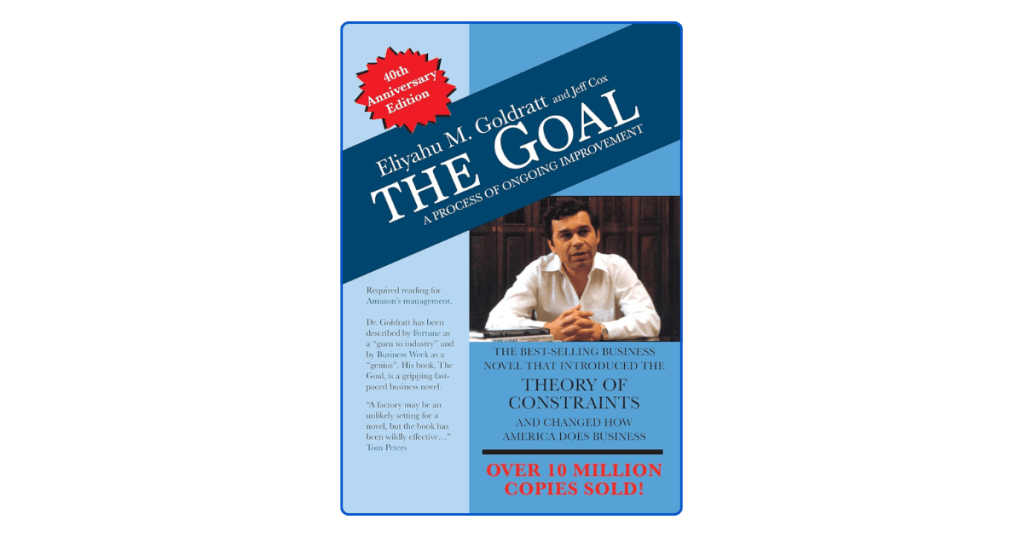
What this operations classic teaches about systems thinking, bottlenecks, and breakthrough results
1. The real goal of business isn’t efficiency it’s profit through continuous improvement
Too many companies get caught in vanity metrics and siloed KPIs. Goldratt cuts through the noise: the real goal is to make money. Everything else efficiency, output, even automation is just a means to that end.
2. Identify your bottlenecks they define your entire system
A system is only as fast as its slowest part. Whether you’re running a factory or a startup, finding the constraint is the first step to improving performance. Focus your energy where it matters most.
3. Don’t optimize everything—optimize the constraint
You don’t need to fix everything at once. Improve the output of your bottleneck and you’ll see ripple effects across the entire operation. It’s not about working harder it’s about working smarter at the weakest link.
4. Measurements must align with the real goal
Traditional metrics (like local efficiencies or labor utilization) can mislead. If they don’t contribute to throughput, reduce inventory, or cut operational expense, they’re noise. Goldratt reframes how we measure success.
5. Throughput > Efficiency
An efficient process that doesn’t generate profit is useless. The focus should be on increasing throughput how quickly you turn inputs into revenue without ballooning costs or inventory.
6. Inventory hides problems
Excess inventory can mask process failures. It ties up cash, creates clutter, and breeds complacency. The leaner the inventory, the clearer your operational issues become. Less buffer, more visibility.
7. Operational flow is more important than operational speed
Speed doesn’t matter if your process keeps stopping and starting. Flow is about rhythm, consistency, and alignment. Improve flow and you improve delivery, satisfaction, and bottom-line growth.
8. Technology is not a silver bullet
New tools won’t solve broken processes. Before you automate, optimize. Applying tech to a flawed system only scales the inefficiency faster. First fix the logic, then use tech to accelerate.
9. People need purpose, not just process
Goldratt’s story-driven style shows how personal growth and team alignment are key to business transformation. When employees understand the “why,” they become partners in solving the “how.”
Disclosure: This post includes affiliate links that may earn me a commission at no cost to you if you make a purchase.
can explore the book here:
Blinkist: Best Book Summaries & Audio Book Guides
10. Improvement is a continuous journey not a one-time fix
“The Goal” is never reached and forgotten. Once you solve one constraint, a new one will emerge. Continuous improvement isn’t a slogan it’s the mindset of any company serious about scaling.
Final Thought:
Eliyahu Goldratt didn’t just write a book he created a movement. “The Goal” teaches us to think in systems, question assumptions, and measure what truly matters. Whether you’re managing a plant, scaling a startup, or building a content engine every business has a constraint. Your job is to find it, fix it, and repeat.
![nick [Alliedify] Avatar](https://0.gravatar.com/avatar/6955a6009ff9c6a76e2eb88c263c9426c8c386b0a7637b4d0cc051871ee8c9f3?s=40&d=identicon&r=G)
 Alliedify
Leave a comment