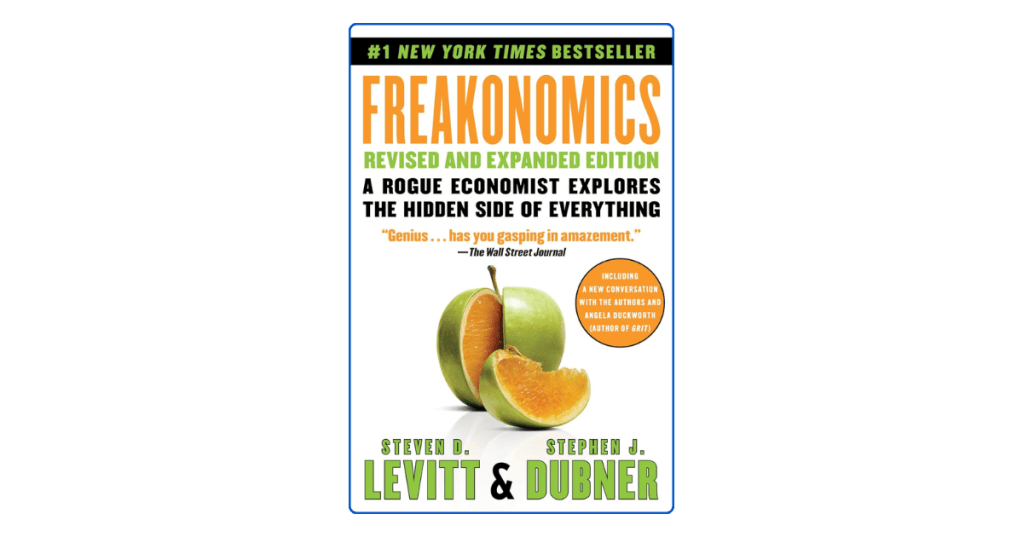
The Hidden Forces That Shape What We Think, Do, and Believe
1. Incentives Rule Everything Around Us
Every choice from business to parenting is driven by incentives. Understand what motivates people, and you can predict or influence their behavior with surprising accuracy.
If you want to change the outcome, change the incentive.
2. Conventional Wisdom Is Often Wrong
Just because everyone believes something doesn’t make it true. Freakonomics peels back the curtain on “common sense” and reveals how flawed most assumptions really are.
Don’t accept answers. Question the questions.
3. Data Tells Stories If You Know How to Listen
Raw data means nothing without the right questions. Levitt doesn’t just analyze statistics he asks better questions that reveal hidden patterns behind seemingly random behavior.
Insight isn’t found in numbers it’s found in interpretation.
4. Correlation ≠ Causation
Two things happening at the same time doesn’t mean one caused the other. This book makes you a better critical thinker by showing how false connections distort how we see the world.
Smart decisions start with skeptical thinking.
5. Experts Have Biases Too
Whether it’s real estate agents or school administrators, “trusted” experts often have their own agendas. Learn to follow the incentives, not the titles, and think independently.
Don’t outsource your judgment to someone else’s motive.
6. Information Is Power Until It’s Shared
Historically, power has come from controlling information. But in the digital age, those who democratize knowledge and make it accessible become the new influencers.
Transparency doesn’t just disrupt systems it reshapes them.
7. Small Choices Can Have Massive Ripple Effects
Whether it’s naming your child or enforcing a school policy, tiny, everyday decisions can impact long-term outcomes. The butterfly effect isn’t just poetic it’s economic.
The seemingly insignificant is often where the truth hides.
8. Human Behavior Is Full of Contradictions
People lie, cheat, hoard, and help often at the same time. The book shows that human nature isn’t black and white; it’s a web of context, incentives, and moral gray areas.
Want to understand people? Ditch the labels and study the patterns.
9. The “Why” Matters More Than the “What”
Everyone sees what happens few understand why it happens. Freakonomics challenges us to dig deeper, explore motives, and find the invisible strings behind visible actions.
Don’t settle for headlines. Hunt for the hidden levers.
10. The World Runs on Hidden Systems
From drug cartels to daycare fines, beneath the chaos lies order hidden economic systems that drive human behavior. Once you spot them, you start seeing cause-and-effect everywhere.
There’s always a pattern but only the curious find it.
Disclosure: This post includes affiliate links that may earn me a commission at no cost to you if you make a purchase.
can explore the book here:
Blinkist: Best Book Summaries & Audio Book Guides
Freakonomics isn’t just a book about economics it’s a mindset for modern problem-solvers. It teaches you to think sideways, dig deeper, and challenge surface-level narratives with data, logic, and relentless curiosity.
Because once you learn to see the hidden side of everything you stop falling for anything.
![nick [Alliedify] Avatar](https://0.gravatar.com/avatar/6955a6009ff9c6a76e2eb88c263c9426c8c386b0a7637b4d0cc051871ee8c9f3?s=40&d=identicon&r=G)
 Alliedify
Leave a comment