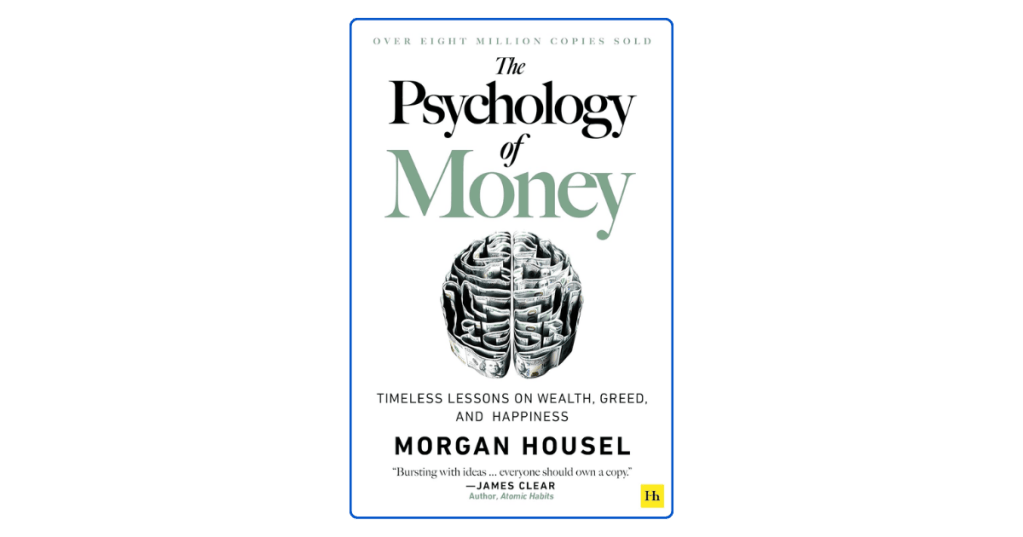
Money is not just about math. It’s about behavior.
In The Psychology of Money, Morgan Housel challenges the idea that financial success is solely driven by knowledge, IQ, or market timing. Instead, he argues that how you think about money your habits, emotions, and beliefs plays a far bigger role in long-term wealth creation.
The book is a series of short, sharp essays that explore the irrational, emotional, and deeply human side of personal finance. Housel uses real-world stories, historical context, and behavioral science to reveal why people often make poor financial decisions even when they know better.
Whether you’re building wealth, managing risk, or simply trying to live a more financially sane life, this book offers clear, practical wisdom rooted in timeless human behavior.
Top 10 Key Lessons from The Psychology of Money
1. Wealth Is What You Don’t See
True wealth isn’t flashy. It’s the income not spent, the car not bought, the status not chased. Rich is visible wealth is quiet.
2. Compounding Is the Most Powerful Force in Finance
Building wealth takes time. Warren Buffett’s fortune didn’t come just from high returns it came from consistency over 70+ years. Start early. Stay invested. Let compounding do the heavy lifting.
3. Saving Is More Powerful Than Income
Your ability to save and live below your means is more important than how much you earn. High income with high expenses is just a treadmill.
4. Behavior > Intelligence
Being good with money has more to do with patience, discipline, and emotional control than intelligence or degrees. Temperament beats spreadsheets.
5. Luck and Risk Are Siblings
Success is never purely merit-based. Luck plays a role and so does risk. Stay humble, be kind, and avoid assuming you’re in control of everything.
6. You Don’t Need to Win Big Just Avoid Losing Big
Avoiding catastrophic mistakes is more important than chasing extraordinary gains. Survival is the foundation of compounding.
7. Tail Events Drive Everything
In business and investing, a few events like one great investment or one bad decision can have an outsized impact. Focus on protecting yourself from the worst while preparing for rare upside.
8. Your Personal Finance Plan Should Be…Personal
There’s no one-size-fits-all strategy. Your goals, values, and life stage should shape your financial decisions. What’s right for someone else may be wrong for you.
9. Wealth Is a Long Game Be Boring If You Have To
The most successful investors are often the least exciting. Boring strategies like index investing and consistent saving usually outperform flashy trades over time.
10. Happiness Isn’t Tied to Wealth It’s Tied to Control
Having money gives you time, freedom, and peace of mind. The goal isn’t to impress it’s to build a life you actually enjoy. That’s real wealth.
Disclosure: This post includes affiliate links that may earn me a commission at no cost to you if you make a purchase.
can explore the book here:
Blinkist: Best Book Summaries & Audio Book Guides
![nick [Alliedify] Avatar](https://0.gravatar.com/avatar/6955a6009ff9c6a76e2eb88c263c9426c8c386b0a7637b4d0cc051871ee8c9f3?s=40&d=identicon&r=G)
 Alliedify
Leave a comment