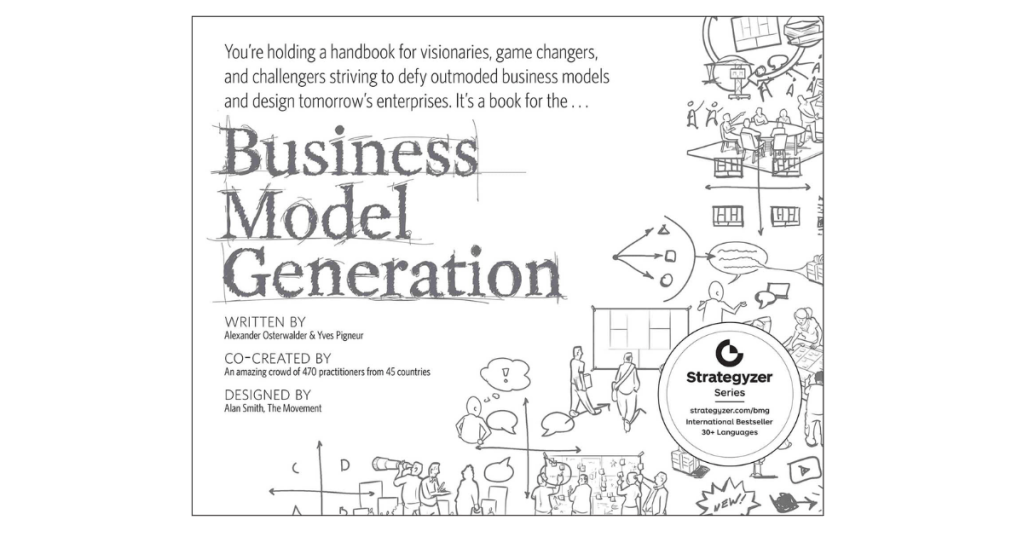
A visual playbook for rethinking how businesses create, deliver, and capture value.
1. Every great business starts with a clear value proposition
The heart of any business model is simple: what problem are you solving, and for whom? Osterwalder emphasizes that your value proposition should directly align with your customer’s needs, frustrations, or aspirations. No fluff just real solutions.
2. The Business Model Canvas is your strategic blueprint
Forget 50-page business plans. The Business Model Canvas gives you a one-page visual map to design, analyze, and test your business idea. It forces clarity across 9 essential components, from customer segments to cost structure.
3. Customer segments are not one-size-fits-all
One of the biggest mistakes startups make is trying to serve “everyone.” Osterwalder insists on identifying distinct customer segments and building tailored solutions for each. Precision beats scale especially in the beginning.
4. Channels aren’t just delivery systems they shape perception
How you reach customers whether through email, retail, social, or partnerships influences how your brand is experienced. Optimize channels for both acquisition and long-term engagement, not just conversions.
5. Strong customer relationships drive long-term success
It’s not just about acquiring customers; it’s about retaining, nurturing, and growing them. Osterwalder breaks down strategies from personal support to automation, emphasizing that relationships are strategic not just operational.
6. Revenue streams must be tested, not assumed
Where and how money flows into your business should be validated early and iterated often. Whether it’s subscriptions, licensing, freemium, or direct sales, explore what customers are truly willing to pay for not just what you want to sell.
7. Key resources = what you must have to deliver value
From tech infrastructure to talent and intellectual property, key resources enable your value proposition to come to life. Osterwalder urges founders to be brutally clear on which resources are mission-critical vs. optional.
8. Key partnerships expand reach, reduce risk, and boost efficiency
No business succeeds in isolation. Strategic alliances can help you enter markets faster, share infrastructure, or co-create products. The book highlights how partnerships can become a powerful part of your growth engine.
9. Your cost structure should reflect your business priorities
Is your model cost-driven (lean) or value-driven (premium)? Osterwalder walks through how costs should align with strategy not just operations. It’s not about cutting costs, it’s about designing them with purpose.
Disclosure: This post includes affiliate links that may earn me a commission at no cost to you if you make a purchase.
can explore the book here:
Blinkist: Best Book Summaries & Audio Book Guides
10. Innovation starts with iteration, not perfection
Perhaps the most powerful lesson: your first business model is a hypothesis. Use the canvas to prototype, test, learn, and pivot. Business modeling is not a one-time event it’s an ongoing process of refinement.
Final Takeaway:
Business Model Generation isn’t just a book it’s a framework for modern entrepreneurship. It arms creators and strategists with the clarity and flexibility needed to design smarter businesses, faster without guesswork.
![nick [Alliedify] Avatar](https://0.gravatar.com/avatar/6955a6009ff9c6a76e2eb88c263c9426c8c386b0a7637b4d0cc051871ee8c9f3?s=40&d=identicon&r=G)
 Alliedify
Leave a comment