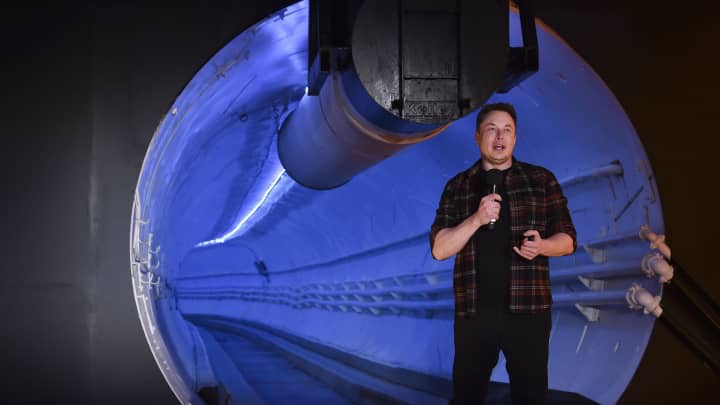
Elon Musk’s tunnel venture, The Boring Company, is gearing up to bring its underground transportation model to Nashville. In a joint announcement with Tennessee Governor Bill Lee, the two parties unveiled early plans to construct a 10-mile underground “loop” system connecting Nashville’s downtown and convention center to the Nashville International Airport (BNA).
The ambitious project marks a significant expansion of The Boring Company’s footprint beyond Las Vegas, the only city to date where such a system is operational. While the plan is still in its early stages, the proposed route could be a game-changer for Tennessee’s capital if Musk’s vision finally materializes beyond the drawing board.
Privately Funded, Publicly Scrutinized
According to a press release from the governor’s office, the Nashville loop will be fully funded by The Boring Company and its unnamed private partners. No taxpayer dollars are currently allocated, a point emphasized by officials to preempt public criticism.
The company, in partnership with local authorities, will now enter a formal planning and community engagement phase, reviewing possible routes, soliciting feedback from residents and stakeholders, and obtaining the necessary regulatory approvals.
If all goes according to schedule, the first segment could become operational as early as fall 2026. Construction will not commence until all legal and environmental hurdles are cleared.
Nashville as Musk’s Next Tunnel City
If completed, Nashville would become only the second city globally to host a functioning Boring Company tunnel. The first, in Las Vegas, has gradually expanded its subterranean transit system around the Las Vegas Convention Center. The company claims to have delivered over 3 million rides using human-driven Teslas in those tunnels, offering an alternative to traditional people-movers and shuttle buses.
While the Las Vegas loop hasn’t revolutionized transportation as originally promised, it has managed to stay operational and has earned a 99.57% safety and security rating, according to a recent joint evaluation by the Department of Homeland Security and TSA.
From Futuristic Vision to Practical Limitations
When Musk founded The Boring Company in 2017—after publicly venting his frustration with Los Angeles traffic on Twitter the concept was far more futuristic. His vision included vehicles riding electric sleds, descending from surface streets into a vast underground network, bypassing urban congestion entirely.
He even floated a “verbal government approval” for a hyperloop tunnel from New York City to Washington D.C. that could, theoretically, shorten the journey to just 29 minutes. However, none of these early promises have come to pass.
Projects in Los Angeles and Chicago were shelved following public opposition, and similar concepts proposed in other cities have largely faded from view. Today, The Boring Company operates more like a low-capacity shuttle system for convention attendees, albeit with more ambitious marketing.
Meanwhile, Musk’s once-touted hyperloop concept meant to disrupt high-speed rail has been all but abandoned, and even the Teslas used in the tunnels continue to be driven by humans despite Musk’s persistent championing of full autonomy.
Safety Concerns Beneath the Surface
Though officials continue to cite the company’s strong safety rating in Vegas, internal concerns have surfaced about the pace and safety of construction. A 2023 Fortune report quoted a Boring Company employee who told his safety manager, “I refuse to be the first fatality in this company’s history. No tunnel is worth a single person’s life.”
That same safety manager spoke publicly, noting the “unbearable” conditions workers faced and highlighting systemic issues that couldn’t be resolved internally.
The Tennessee Governor’s office has yet to comment on those reports or provide additional clarity about how worker safety will be ensured during the Nashville project.
A Tunnel Toward the Future, or More Hype?
The Nashville loop, if successful, could serve as a model for other mid-sized cities seeking scalable, low-impact transportation alternatives. Its promise of privately funded, minimally disruptive infrastructure is appealing, especially at a time when major public transit projects often stall due to budget constraints or local opposition.
Still, The Boring Company’s mixed track record and Musk’s tendency toward overpromising has led to skepticism. Critics argue the company has yet to deliver on the scale or efficiency originally envisioned.
For now, Nashville is poised to be the next testing ground for a bold, if elusive, idea. Whether Musk’s tunnel empire will finally emerge as a real solution to urban transit or remain a flashy detour remains to be seen.
![nick [Alliedify] Avatar](https://0.gravatar.com/avatar/6955a6009ff9c6a76e2eb88c263c9426c8c386b0a7637b4d0cc051871ee8c9f3?s=40&d=identicon&r=G)
 Alliedify
Leave a comment