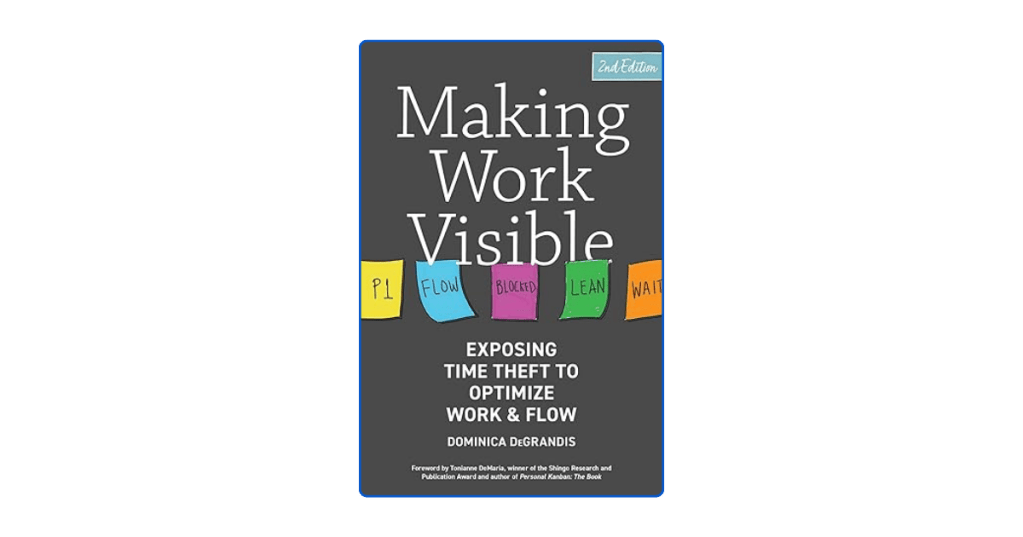
Introduction – Turning Invisible Work Into Measurable Progress
In Making Work Visible, Dominica DeGrandis sheds light on one of the biggest productivity killers in modern organizations—hidden work. These are the tasks, interruptions, delays, and context switches that silently drain time, energy, and efficiency without being accounted for.
DeGrandis takes readers inside the mechanics of time theft, showing how inefficiencies creep into projects and workflows. More importantly, she offers practical tools—like visual boards and flow-based metrics—to reveal where work is stuck, why delays happen, and how to create smoother, faster delivery.
By exposing bottlenecks and prioritizing visibility, this book equips teams and leaders to reclaim lost time, improve collaboration, and build a culture where productivity is intentional rather than accidental.
Top 10 Lessons from Making Work Visible
1. You Can’t Manage What You Can’t See
Unseen work is unmeasured work—making it impossible to improve. Visualizing tasks is the first step toward efficiency.
2. The Five Thieves of Time Must Be Named and Tackled
Too much work-in-progress, unplanned work, conflicting priorities, unknown dependencies, and neglected work silently drain productivity.
3. Work-in-Progress Limits Protect Flow
Overloading a team with too many tasks at once guarantees delays. Limiting active projects accelerates delivery.
4. Unplanned Work Disrupts Everything
Urgent, untracked tasks derail planned priorities. A buffer for unexpected work keeps schedules realistic.
5. Conflicting Priorities Erode Focus
Without a clear, shared understanding of priorities, teams waste time switching between competing demands.
6. Dependencies Must Be Visible Early
Hidden dependencies cause delays and frustration. Mapping them upfront prevents bottlenecks.
7. Visual Management Boards are More Than Status Tools
Kanban boards and other visual tools are diagnostic instruments for finding inefficiencies—not just for tracking progress.
8. Metrics Should Measure Flow, Not Just Output
Throughput, cycle time, and lead time give a clearer picture of productivity than task counts alone.
9. Continuous Improvement Requires Continuous Visibility
Problems resurface when visibility fades—making transparency a non-negotiable daily habit.
10. Time Theft is a Cultural Issue
Optimizing workflow isn’t just about tools; it’s about building a culture where hidden work is acknowledged and addressed.
can explore the book here:
Blinkist: Best Book Summaries & Audio Book Guides
Why This Book Matters
In a world where teams often feel “busy” but aren’t necessarily moving forward, Making Work Visible is both a wake-up call and a playbook. It gives leaders the language, metrics, and visual systems to combat inefficiency and create sustainable, high-performance environments.
Final Take:
“Productivity isn’t about working harder—it’s about making the invisible visible, so effort truly turns into results.”
![nick [Alliedify] Avatar](https://0.gravatar.com/avatar/6955a6009ff9c6a76e2eb88c263c9426c8c386b0a7637b4d0cc051871ee8c9f3?s=40&d=identicon&r=G)
 Alliedify
Leave a comment