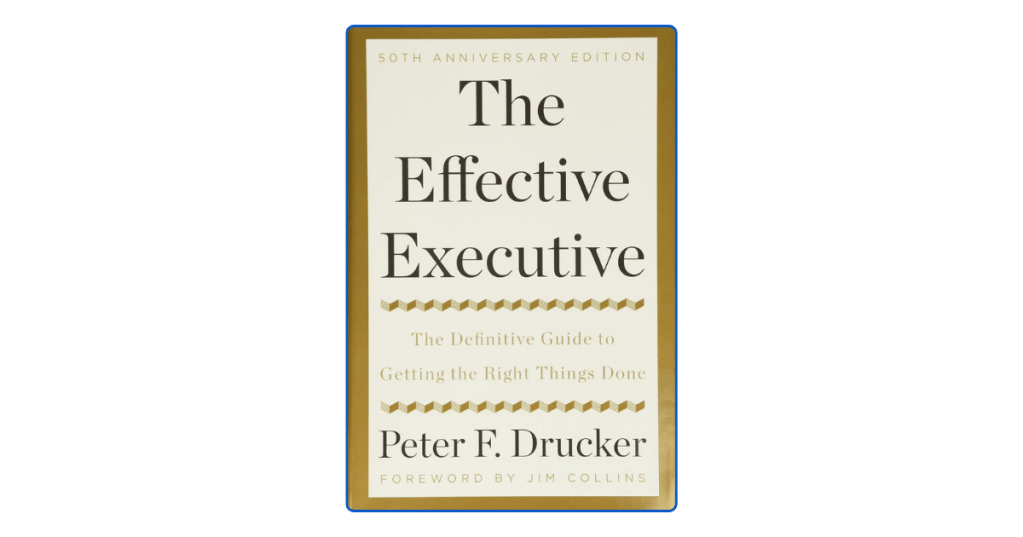
The Effective Executive is a timeless business classic by Peter F. Drucker widely regarded as the father of modern management. Published over 50 years ago, its insights are more relevant than ever in today’s fast-paced, decision-saturated work culture.
Drucker doesn’t glamorize busyness or productivity hacks. Instead, he zeroes in on one core idea: effectiveness can be learned. Being smart isn’t enough. Being in charge doesn’t guarantee results. The executives (or knowledge workers) who consistently make better decisions, manage time wisely, and focus on what truly matters are the ones who lead with impact.
This book is not about doing more things it’s about doing the right things. It’s a manual for leaders who want clarity in chaos, strategy in motion, and results that outlive tasks.
Top 10 Lessons from The Effective Executive
1. Effectiveness Is a Skill, Not a Trait
Drucker makes it clear: effective executives are not born they’re made. Through deliberate practice, time management, and decision discipline, anyone can become more effective, regardless of personality.
2. Time Is the Executive’s Scarcest Resource
Forget budget or talent time is the real bottleneck. The best leaders track, audit, and protect their time ruthlessly. Drucker advises: “What gets measured gets managed,” especially when it comes to your calendar.
3. Know Where Your Time Goes
Before setting goals, evaluate how your time is currently being spent. Most knowledge workers underestimate distractions and overestimate focus. Drucker’s strategy: eliminate time-wasters first, then reallocate hours toward priorities.
4. Focus on Contribution, Not Just Effort
Effectiveness is not about how hard you work, but how much value you produce. Drucker urges executives to ask: What contribution can I make that will significantly impact my organization? That question changes everything.
5. Make Strength Productive
Don’t fixate on weaknesses. Drucker believed great executives build on the strengths of themselves, their teams, and their organizations. Excellence comes from optimizing what you already do well.
6. First Things First—And Second Things Not at All
Prioritization is central to Drucker’s philosophy. He warns against being trapped by urgency. The effective executive identifies a few critical tasks and commits to them before anything else.
7. Effective Decisions Are Made Systematically
Great decisions aren’t about gut feeling. They require clear definitions of the problem, criteria for success, and consideration of alternatives. Drucker outlines a structured method to turn thinking into action.
8. Don’t Overload the System
Executives often overcommit and under-deliver. Drucker reminds leaders to resist the temptation of endless to-do lists. Focus on fewer, bigger bets and ensure they get done exceptionally well.
9. Think and Act on the Future
The effective executive doesn’t only react they anticipate. Drucker believed forward-focused leaders shape outcomes by making decisions today that prepare them for tomorrow’s reality.
Disclosure: This post includes affiliate links that may earn me a commission at no cost to you if you make a purchase.
can explore the book here:
Blinkist: Best Book Summaries & Audio Book Guides
10. Ask: What Needs to Be Done?
One of Drucker’s simplest but most powerful tools. Effective leaders begin with this question not what they want to do, but what needs to be done to drive progress. That shift creates clarity, purpose, and action.
![nick [Alliedify] Avatar](https://0.gravatar.com/avatar/6955a6009ff9c6a76e2eb88c263c9426c8c386b0a7637b4d0cc051871ee8c9f3?s=40&d=identicon&r=G)
 Alliedify
Leave a comment