Nick — sep 2025
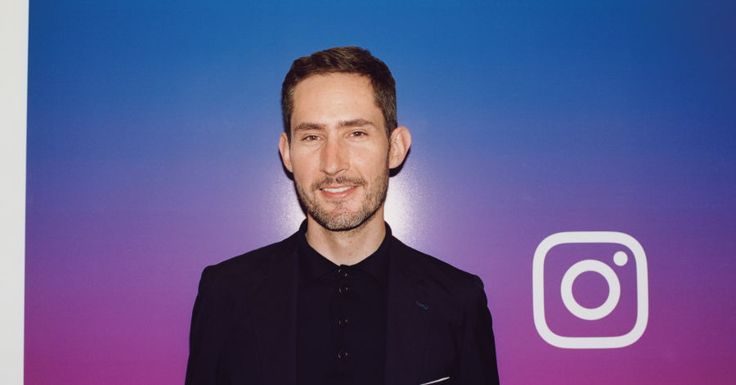
Long before Instagram became a household name or a billion-dollar acquisition, its creator Kevin Systrom was just another guy behind a coffee counter—literally. By day, he brewed lattes as a barista. By night, he taught himself how to code.
But this isn’t just a tech fairytale about a guy who made it big. It’s a story about failure, clarity, and one radical decision that turned a flop into one of the most iconic apps of our generation.
Let’s rewind to the early 2010s, back when mobile apps were still a new frontier and sharing a photo online wasn’t second nature yet.
Brewing Ambitions: From Coffee Runs to Code
Kevin Systrom didn’t start out with dreams of building the next social media empire. In fact, he studied management science and engineering at Stanford—not computer science. After college, he worked at Google in marketing for Gmail and Google Calendar but felt unfulfilled.
He wasn’t building anything. And that itch to create grew stronger each day.
So, he made a change. He quit his job and took up part-time work at a coffee shop, freeing up time to focus on his real passion: building something of his own. At night, he’d crack open coding books and teach himself how to build apps—line by line, error by error.
It was during this time that he built his first project: Burbn.
Burbn: A Social App That Tried to Do Too Much
Burbn was originally designed as a check-in app, similar to Foursquare. It let users share their location, make plans, post photos, earn points, and even review places.
Sounds like a good idea, right? Except it wasn’t.
The app was bloated with features. Users found it confusing. There was no clear value proposition. In the world of product design, it committed the cardinal sin: trying to be everything to everyone. And as a result, it resonated with no one.
But while the app struggled to gain traction, Systrom and his co-founder Mike Krieger noticed something curious—people loved uploading photos on Burbn. They weren’t using the other features. Not the check-ins. Not the gamification. Just the photo-sharing.
Most founders would try to tweak the failing parts or add even more features to compensate. Systrom did the opposite.
He nuked everything.
The Pivot: Subtraction Over Addition
In a bold, almost counterintuitive move, Systrom and Krieger stripped Burbn down to just one feature: photo-sharing. They wanted it to be fast, easy, and beautiful. They focused on simplicity.
This new version had just a few core features:
Take or upload a photo.
Apply a filter.
Post it with a caption.
That was it. No filters? No followers? No problem.
They also rebranded it with a new name: Instagram, short for “Instant Telegram.” It was a nod to the instant nature of sharing moments and the retro, analog aesthetic of Polaroids and telegrams.
Launch Day: 25,000 Downloads in a Day
Instagram officially launched on October 6, 2010. Within 24 hours, it had 25,000 downloads. Within a week, that number ballooned to 100,000. It wasn’t just hype—it was product-market fit in real time.
Systrom and Krieger had finally hit a nerve.
The timing was perfect. The iPhone 4 had just been released with a better camera, and people were hungry for a simple, elegant way to share life’s moments. Instagram filters made even the most ordinary coffee cup or sunset look magical. And because it was built mobile-first, it felt native and frictionless.
The app exploded, not just with techies but with mainstream users, creatives, influencers, and even celebrities. Within two years, it had over 30 million users.
The $1 Billion Moment
In April 2012, just 18 months after launch, Facebook made a jaw-dropping move. Mark Zuckerberg offered to acquire Instagram for $1 billion in cash and stock.
At the time, Instagram had just 13 employees and zero revenue.
Many critics called it outrageous. But Zuckerberg saw what others didn’t: Instagram wasn’t just a photo app—it was the future of mobile engagement.
Systrom agreed to the deal, but with one critical condition: Instagram would remain independent. That independence helped the app grow without being bogged down by Facebook’s bureaucracy.
Fast-forward to today, and Instagram is one of the most powerful platforms in the world, with over 2 billion active users, a thriving creator economy, and a cultural influence that reshaped how we see the world—through filters, reels, and curated feeds.
Lessons from a $1B Pivot
The story of Instagram isn’t just a Silicon Valley legend—it’s a masterclass in product design, timing, and decision-making. But most of all, it’s a reminder that:
Success doesn’t come from doing more—it often comes from doing less.
Burbn failed because it tried to do everything. Instagram succeeded because it focused on doing one thing exceptionally well.
Failure is just data.
Instead of treating Burbn’s lack of success as a dead end, Systrom used it as a mirror. He asked what users were gravitating toward—and then went all in.
The journey is nonlinear.
From lattes to lines of code, Kevin Systrom’s path wasn’t typical. But it was intentional. He kept learning, iterating, and making bold choices.
Final Thought: The Power of Focus
Instagram didn’t succeed because Kevin Systrom had the perfect idea. It succeeded because he had the humility to admit what wasn’t working and the courage to eliminate everything that distracted from what was.
In a world obsessed with scaling up, growing fast, and adding features, maybe the smartest thing we can do is subtract.
Strip it down. Focus. And let what works shine.
Sometimes, all it takes is one good filter—and the willingness to change.
![nick [Alliedify] Avatar](https://0.gravatar.com/avatar/6955a6009ff9c6a76e2eb88c263c9426c8c386b0a7637b4d0cc051871ee8c9f3?s=40&d=identicon&r=G)
 Alliedify
Leave a comment