Accomplish More by Managing Time, Focus, and Energy Not Just Working Harder
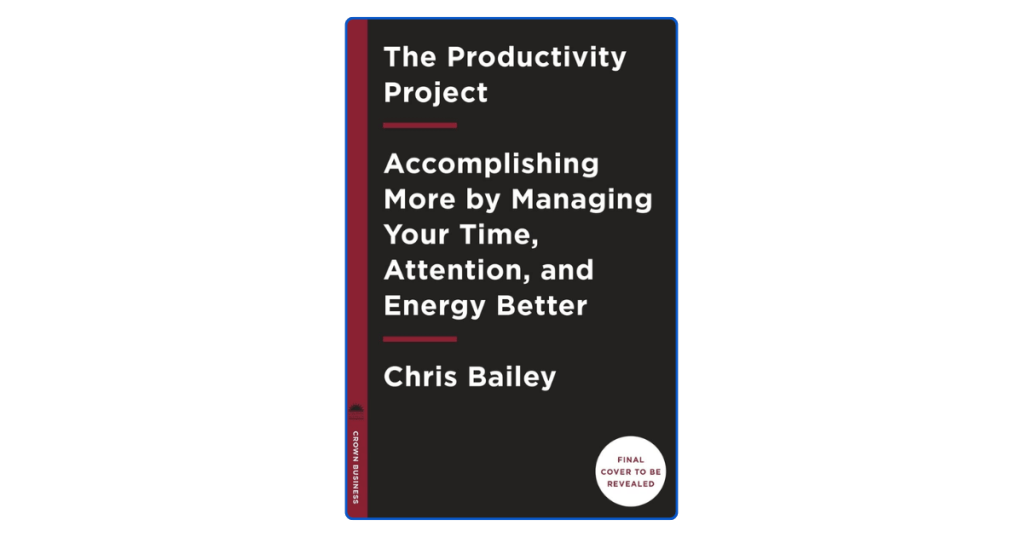
In The Productivity Project, Chris Bailey embarks on a year-long experiment to find out what truly boosts productivity and what’s just hype. After turning down lucrative job offers post-graduation, Bailey dedicated twelve months to testing productivity techniques on himself, measuring what actually helps you get more done without burning out.
But this isn’t just a book of hacks or time-saving tricks. It’s a research-driven, refreshingly human exploration of how our attention, energy, and purpose shape our effectiveness far more than rigid schedules ever could. Through interviews, psychological studies, and self-tracking, Bailey filters through the noise and delivers simple yet powerful insights you can apply today whether you’re a creator, entrepreneur, or corporate professional.
Top 10 Lessons from The Productivity Project
1. You Only Have Three Resources: Time, Energy, and Attention
Most productivity advice only focuses on time. But Bailey makes it clear energy and focus are often more limiting than hours in the day. Managing all three is key to doing your best work.
Productivity isn’t about doing more it’s about doing the right things with the right fuel.
2. Tackle the Most Important Task First (MIT Rule)
Start each day with your most meaningful task the one that moves the needle. Bailey calls this the Most Important Task (MIT). Doing it early helps build momentum and prevents busywork from stealing your day.
Front-load your day with what matters most.
3. The Rule of Three Keeps You Focused
Each morning, define just three things you want to accomplish. This simple rule keeps your goals clear, prevents task overload, and helps measure meaningful progress.
Simplicity drives clarity. Clarity drives results.
4. Busyness Is Not Productivity
One of Bailey’s biggest takeaways: being busy is not the same as being productive. Distractions, multitasking, and constant motion can feel productive but often get in the way of real results.
Stop confusing motion with progress.
5. Energy Management Beats Time Management
Time is finite, but energy fluctuates. Bailey found his most productive hours were tied to when he had the most mental and physical energy not the most time.
Schedule your toughest work for your peak energy zones.
6. Email Is a Trap Check It Less
Constantly checking email destroys your focus. Bailey recommends limiting email to set windows and not starting your day in your inbox.
Your inbox is a to-do list written by other people. Guard your attention.
7. Mindfulness Sharpens Focus
Meditation and mindfulness weren’t just fluff Bailey found they made a measurable difference in focus and mental clarity. Even a few minutes a day trained his brain to resist distraction.
The more aware you are, the more intentional your work becomes.
8. Multitasking Wrecks Efficiency
Bailey tested multitasking and found it consistently reduced productivity. Switching between tasks wastes energy and leads to lower-quality output.
Focus on one thing at a time your brain will thank you.
9. Take Breaks. Seriously.
Working non-stop backfires. Regular breaks, walks, naps, and even boredom recharge your energy and restore creativity. Productivity is cyclical, not linear.
Breaks are not indulgences they’re productivity tools.
10. You Don’t Need More Time You Need Better Intentions
Ultimately, productivity is about intention. It’s not about doing everything it’s about doing what truly matters, deliberately and with focus.
Purpose-driven productivity always outperforms hustle culture.
Final Thought
The Productivity Project isn’t about hustle it’s about working smarter with intention, energy, and clarity. Chris Bailey’s year-long experiment proves that you don’t need to do more to be more productive you need to do less, better, and with deeper focus.
For anyone feeling overwhelmed by to-do lists, distracted by digital noise, or burned out by busywork, this book offers practical wisdom and grounded strategies that stick.
Disclosure: This post includes affiliate links that may earn me a commission at no cost to you if you make a purchase.
can explore the book here:
Blinkist: Best Book Summaries & Audio Book Guides
![nick [Alliedify] Avatar](https://0.gravatar.com/avatar/6955a6009ff9c6a76e2eb88c263c9426c8c386b0a7637b4d0cc051871ee8c9f3?s=40&d=identicon&r=G)
 Alliedify
Leave a comment