Innovation Isn’t What You’ve Been Told
In today’s culture, innovation is idolized but also misunderstood. We imagine “eureka” moments, lone geniuses, and overnight success stories. In The Myths of Innovation, author and former Microsoft project manager Scott Berkun takes a sledgehammer to these romanticized ideas. He delivers a sharp, research-backed guide that challenges the clichés surrounding creativity, invention, and breakthrough ideas.
Berkun’s central message is clear: Innovation is not magic it’s methodical. Real innovation comes from persistence, experimentation, timing, teamwork, and often, a bit of luck. The book strips away the misleading narratives that dominate startup culture and TED talks, and replaces them with practical truths that anyone from entrepreneurs to designers to leaders can act on.
Whether you’re trying to launch a product, lead a creative team, or simply think more originally, The Myths of Innovation reveals what it really takes to turn ideas into impact.
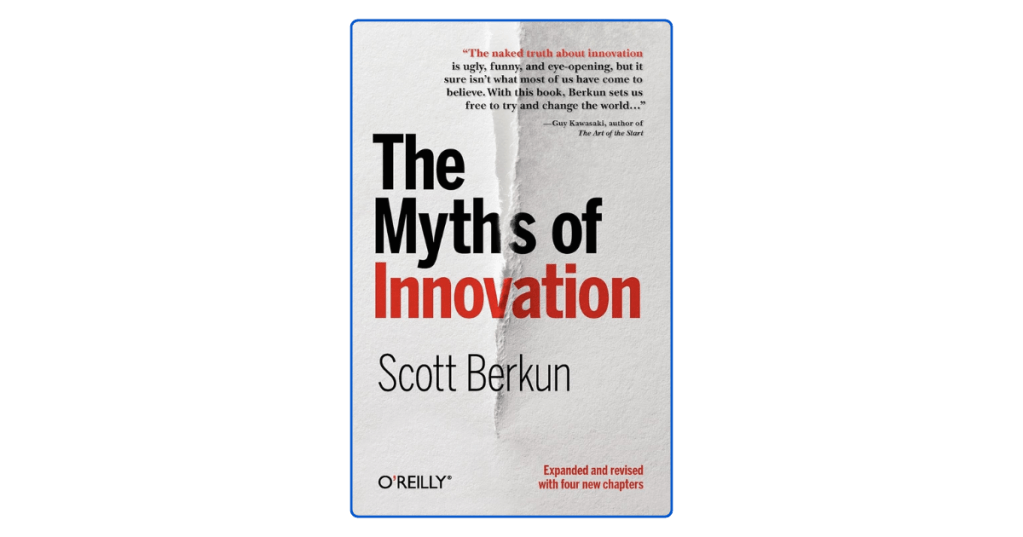
Top 10 Lessons from The Myths of Innovation by Scott Berkun
1. There’s No Such Thing as a “Eureka” Moment
Breakthroughs are rarely sudden. Most “lightbulb” ideas are built on years of unseen trial, error, and incremental progress. Innovation is a process, not a spark.
2. The Lone Genius Is a Dangerous Myth
Innovation is almost always collaborative. Even the most iconic inventors like Edison or Jobs relied on teams, networks, and predecessors to succeed.
3. Ideas Are Easy Execution Is Everything
Great ideas are common. What separates innovators is the ability to act, adapt, and bring those ideas to life despite obstacles and resistance.
4. Innovation Doesn’t Always Look New
Often, what feels innovative is a clever remix of existing technologies or methods. True creativity involves connecting the dots in new ways not inventing in a vacuum.
5. Constraints Fuel Creativity
Limitations whether budget, time, or tools don’t stifle innovation. They spark it. Working within boundaries forces sharper thinking and better problem-solving.
6. The Best Ideas Often Start as Underdogs
Breakthroughs are usually resisted at first. History shows that many world-changing ideas were ignored, laughed at, or dismissed before gaining traction.
7. Timing Is More Important Than You Think
Being “first” doesn’t guarantee success. It’s often those who arrive at the right time, with the right product-market fit, who win.
8. You Don’t Find Innovation by Sitting Still
Curiosity and exploration drive creativity. Innovators ask better questions, challenge assumptions, and actively seek out diverse perspectives and problems to solve.
9. Innovation Needs Champions, Not Just Creators
New ideas need advocates people who can defend them, pitch them, and push them through bureaucracy or resistance. Selling the idea is as important as building it.
10. Failure Is Not Optional It’s Required
You can’t innovate without taking risks. Failure is baked into the process. What matters is learning, iterating, and refusing to stop at the first setback.
Final Thought: Real Innovation Is Gritty, Not Glamorous
The Myths of Innovation is a reality check for anyone chasing creative glory. Scott Berkun reminds us that behind every “overnight success” is a story of persistence, collaboration, failure, and quiet progress. If you want to truly innovate not just talk about it this book will help you build the mindset and habits that actually lead to breakthroughs.
Forget the hype. Learn the truth. Then do the work.
Disclosure: This post includes affiliate links that may earn me a commission at no cost to you if you make a purchase.
can explore the book here:
Blinkist: Best Book Summaries & Audio Book Guides
![nick [Alliedify] Avatar](https://0.gravatar.com/avatar/6955a6009ff9c6a76e2eb88c263c9426c8c386b0a7637b4d0cc051871ee8c9f3?s=40&d=identicon&r=G)
 Alliedify
Leave a comment