By David Heinemeier Hansson & Jason Fried
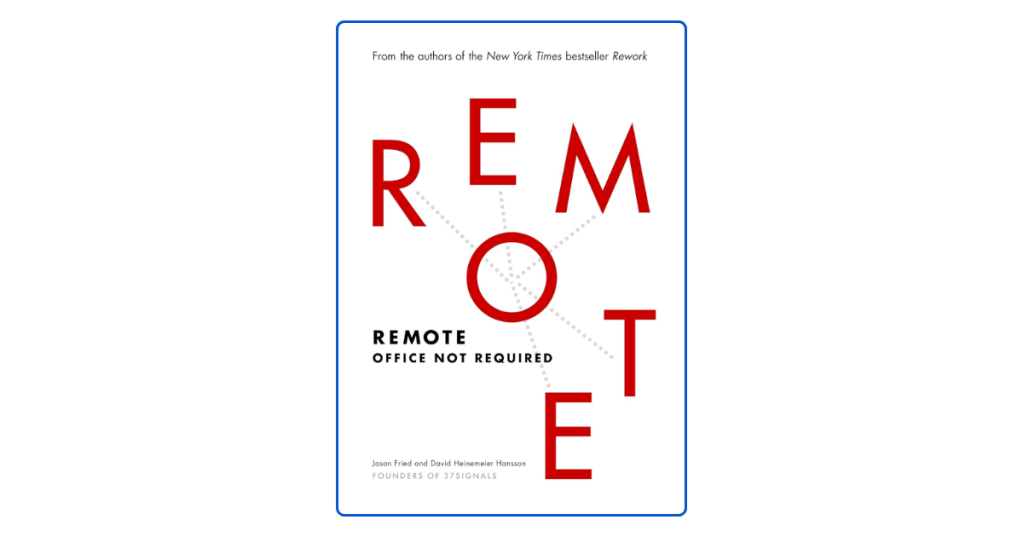
Remote: Office Not Required is a bold manifesto that challenges the traditional 9-to-5 office setup and makes a compelling case for the future of work one that’s flexible, location independent, and productivity focused. Written by the founders of Basecamp, this book is not just a playbook for remote work it’s a mindset shift for both employers and employees who want freedom without sacrificing results.
In an era where technology has erased borders and unlocked global collaboration, Hansson and Fried argue that clinging to outdated office norms is not only inefficient but counterproductive. Remote provides real-world examples, actionable strategies, and tough-love advice on managing distributed teams, hiring the right talent, and maintaining company culture without requiring a shared physical space.
Whether you’re a startup founder, a freelancer, or a corporate leader, this book equips you with the tools to thrive in a remote-first world.
Top 10 Key Lessons from Remote: Office Not Required
1. Work Doesn’t Happen at Work
The office is full of distractions meetings, interruptions, and micromanagement. Remote work allows people to do deep, meaningful work in environments that suit their focus and energy.
2. Talent Isn’t Limited by Zip Codes
When location is no longer a constraint, companies can hire the best talent from anywhere in the world leading to more diverse, skilled, and motivated teams.
3. Trust, Not Surveillance, Drives Productivity
Micromanagement kills morale. Remote teams thrive when leaders trust their people to manage their time and deliver results without constant oversight.
4. Asynchronous Communication Is a Superpower
Remote teams succeed when they reduce the need for real time communication. Well written messages and thoughtful documentation create clarity without chaos.
5. Culture Doesn’t Require Cubicles
A strong company culture is built on shared values, not office perks. Remote teams can build meaningful culture through intentional communication and mutual respect.
6. The Office Is a Tool, Not a Necessity
Offices can still have value as places to meet, collaborate, or host but they’re not essential to getting work done. They should be optional, not mandatory.
7. Meetings Should Be the Exception, Not the Rule
Remote work discourages unnecessary meetings. If something can be solved via a message or a document, it probably doesn’t need to interrupt everyone’s flow.
8. Remote Work Demands Clear Writing
In a distributed team, your words are your voice. Clear, concise, and respectful writing becomes one of the most valuable professional skills.
9. Freedom Leads to Loyalty
People who are given the freedom to manage their lives and work on their terms are often more engaged, loyal, and productive than those forced into rigid schedules.
10. Remote Is the Future and the Present
The shift to remote isn’t coming it’s already here. Companies that resist will struggle to attract top talent, while those that embrace it will unlock global potential.
Disclosure: This post includes affiliate links that may earn me a commission at no cost to you if you make a purchase.
can explore the book here:
Blinkist: Best Book Summaries & Audio Book Guides
![nick [Alliedify] Avatar](https://0.gravatar.com/avatar/6955a6009ff9c6a76e2eb88c263c9426c8c386b0a7637b4d0cc051871ee8c9f3?s=40&d=identicon&r=G)
 Alliedify
Leave a comment