We like to think of ourselves as rational creatures especially in the workplace and in our personal decisions. But what if our irrational quirks weren’t weaknesses… but hidden strengths?
In The Upside of Irrationality, behavioral economist Dan Ariely turns conventional wisdom upside down. Through groundbreaking experiments and real world anecdotes, Ariely explores how our illogical behaviors shape everything from motivation and productivity to love and decision-making. Instead of treating irrationality as a flaw, he reveals how it can actually lead to better choices, stronger relationships, and surprising advantages if we understand it.
This isn’t just a psychology book. It’s a practical guide for navigating modern life with greater empathy, awareness, and creativity. Whether you’re managing a team, leading a business, or trying to understand your own habits, Ariely’s insights offer powerful tools for thinking beyond logic.
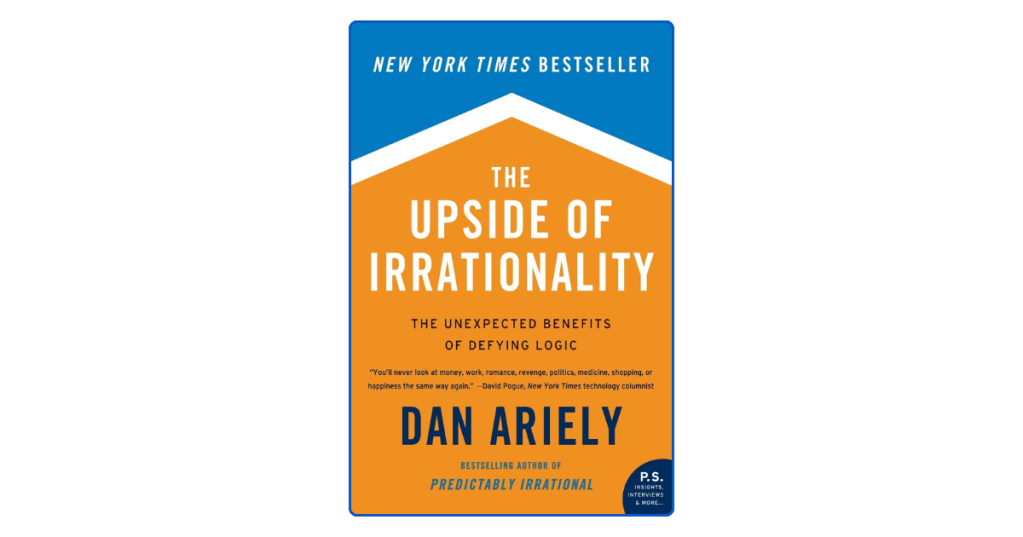
Top 10 Lessons from The Upside of Irrationality by Dan Ariely
1. Small Rewards Often Outperform Big Ones
Ariely’s experiments show that high stakes rewards (like large bonuses) can increase pressure and actually reduce performance especially for tasks requiring creativity or problem solving. Sometimes, less is more when it comes to motivation.
2. We Overvalue What We Create Even If It’s Flawed
From IKEA furniture to workplace projects, people develop emotional attachments to things they build. This “IKEA effect” teaches leaders to give people ownership if they want stronger engagement and satisfaction.
3. Adaptation Can Mask Progress
Humans adapt quickly to changes both good and bad. This makes us prone to undervaluing progress and forgetting improvements. To sustain morale, leaders must regularly reframe wins and reinforce positive change.
4. We’re Biased Toward Meaning, Not Just Money
People will work harder for purpose than for pay alone. Ariely found that when employees felt their work was ignored or meaningless, motivation dropped dramatically even with the same compensation.
5. Emotions Shape Decisions More Than Data
We often think decisions especially at work are based on facts and logic. But emotional states, past experiences, and personal triggers have more influence than we realize. Awareness of this bias leads to better choices.
6. Online Dating Highlights the Limits of Rational Choice
In a fascinating section on love, Ariely shows how people often think they know what they want but their behavior says otherwise. Love and relationships are messy, emotional, and irrational and that’s part of what makes them work.
7. Repeated Exposure Can Amplify Irrational Behavior
One irrational action might seem harmless. But repeated patterns like revenge, procrastination, or comparison compound over time. Recognizing these loops is key to rewiring behavior.
8. Frustration Increases When Expectations Aren’t Met
Whether it’s tech glitches or workplace feedback, unmet expectations lead to disproportionate frustration. Managing expectations clearly through communication and transparency improves satisfaction and outcomes.
9. We Struggle to Make Trade-Offs
Ariely explains that we hate letting go of options even when it’s irrational to keep them open. In both life and business, learning to prioritize and eliminate can lead to greater clarity and success.
10. Self-Awareness Isn’t Enough Systems Matter
Just knowing we’re irrational isn’t enough to change behavior. Ariely emphasizes the need to design systems from workflows to habits that help us navigate irrational tendencies effectively.
Final Thought:
The Upside of Irrationality is a refreshing reminder that humans are not spreadsheets. We’re emotional, inconsistent, and beautifully irrational. But within that chaos lies opportunity. Dan Ariely doesn’t just analyze our quirks he helps us work with them, not against them.
For anyone looking to build better teams, make smarter decisions, or simply understand themselves a little more, this book is more than a psychology read it’s a practical toolkit for navigating the irrational human experience with insight and grace.
Disclosure: This post includes affiliate links that may earn me a commission at no cost to you if you make a purchase.
can explore the book here:
Blinkist: Best Book Summaries & Audio Book Guides
![nick [Alliedify] Avatar](https://0.gravatar.com/avatar/6955a6009ff9c6a76e2eb88c263c9426c8c386b0a7637b4d0cc051871ee8c9f3?s=40&d=identicon&r=G)
 Alliedify
Leave a comment